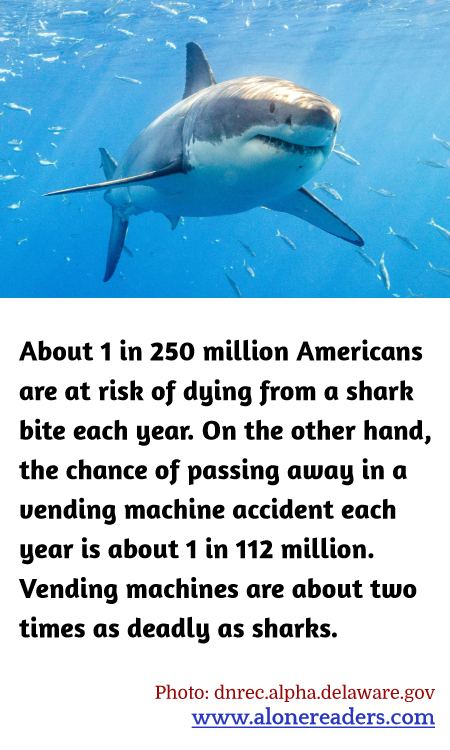
Despite widespread fears and sensationalized media stories about shark attacks, they are exceedingly rare, particularly when compared to more mundane hazards. Research suggests that only 1 in 250 million Americans will die from a shark bite in a given year. This minuscule risk highlights the discrepancy between perceived danger and actual danger posed by these marine creatures.
In an unexpected comparison, vending machines present a higher risk of fatality than sharks. The odds of dying from a vending machine accident are about 1 in 112 million annually. This statistic makes vending machines roughly twice as deadly as sharks. The mechanics of such accidents usually involve the machines falling on individuals during attempts to tilt or shake them, typically after these machines malfunction or fail to dispense purchased items.
This comparison between shark attacks and vending machine incidents serves as a compelling illustration of everyday risks that go unnoticed. It underscores the importance of focusing on real, everyday risks rather than sensational but highly unlikely dangers. The fear of sharks has been ingrained in public consciousness, largely due to movies and media, whereas the humble vending machine doesn’t invoke nearly the same level of fear, despite being statistically more dangerous.
Acknowledgment of these statistics is not just a trivial factoid; it reflects broader truths about human psychology and risk assessment. People tend to overestimate the likelihood of dramatic and rare events while underestimating the risks associated with more common activities. Understanding and adjusting for these biases is crucial for making informed decisions about safety and risk in daily life. Thus, while exercising caution in the ocean remains sensible, perhaps a greater awareness of the risks posed by seemingly benign everyday objects is also necessary.
