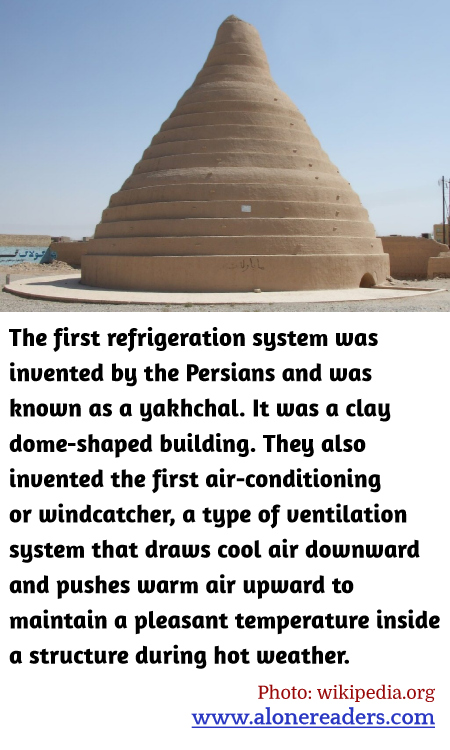
The first refrigeration system, known as the yakhchal, was an ingenious creation by the ancient Persians. This dome-shaped building, typically constructed from clay, represented a significant achievement in architectural design and environmental adaptation. The yakhchal was designed to store ice and food items, keeping them cool even in the harsh, arid climate of the Persian desert regions. Its effectiveness in storing ice collected during the winter months or from nearby mountains was enhanced by its unique structure and the materials used in its construction. The thick clay walls insulated the interior from external heat while a deep underground storage space, sometimes as far down as 14 meters beneath the ground, ensured that the stored ice didn’t melt even during summer.
Simultaneously, the ancient Persians developed another innovative cooling system known as the windcatcher or "badgir." This architectural feature was an early form of air conditioning, designed to manage airflow within buildings and ensure a comfortable living environment. Windcatchers function by catching the wind at the top of tall, chimney-like structures and channeling it down into the interior of buildings. The strategically directed airflow could dramatically reduce indoor temperatures, making these structures remarkably sustainable solutions for cooling, particularly in arid regions. Depending on the specific design and the direction it faced, a windcatcher could either expel hot air from inside or draw cooler breeze from outside into the building.
These ancient innovations highlight not only the ingenuity of Persian engineers but also their profound understanding of natural processes and sustainable design. Both the yakhchal and the windcatcher display a sophisticated approach to climate control, water preservation, and resource management, which was far ahead of its time. The legacy of such systems can still be seen today in modern sustainable architectural designs that aim to harness natural ventilation and passive cooling techniques similar to those used thousands of years ago in Persia. By revisiting these ancient techniques, contemporary architects and engineers can learn valuable lessons in creating energy-efficient buildings that leverage the natural environment effectively.
