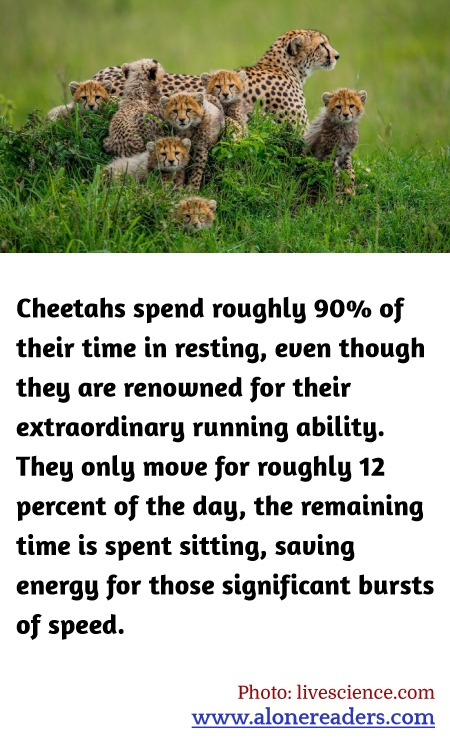
Cheetahs, known as the fastest land animals, have an incredible ability to accelerate from 0 to 60 miles per hour in just a few seconds. However, despite their reputation for speed, cheetahs actually spend about 90% of their time resting. This significant amount of rest is crucial for conserving energy, which they require in large amounts for their high-speed chases.
The daily life of a cheetah primarily involves lying down under the shade of trees or tall grasses, particularly during the heat of the day. This resting period is not merely a preference but a survival strategy. Since cheetahs burn a tremendous amount of energy during a chase, they need long periods of rest to recover. The energy cost of sprinting is so high that a cheetah can only maintain its full speed for about 20 to 30 seconds. After a chase, whether successful or not, cheetahs often spend the next few days recuperating.
Moreover, cheetahs’ hunting strategy itself dictates their need to rest extensively. They rely heavily on the element of surprise to get as close as possible to their prey before launching their high-speed pursuit. Therefore, much of their limited activity period, which accounts for about 12% of their day, is used for stalking prey and positioning themselves strategically. If they expended too much energy by being constantly active, they would lack the necessary burst of speed at the crucial moment.
Additionally, cheetahs' physical build—lightweight bodies and long, powerful legs designed for speed—make them less suited to long-distance running, which would normally help in patrolling large territories or searching for resources. Thus, staying put and resting becomes even more vital to their lifestyle.
In a broader ecological context, this behavior demonstrates a fascinating adaptation to their environment. It reflects the balance cheetahs must maintain between energy conservation and the need to hunt, highlighting an intricate aspect of the survival strategies employed by different species in the animal kingdom. Their unique pattern of activity underscores the complex interplay between physiology, environment, and behavior in wildlife.
