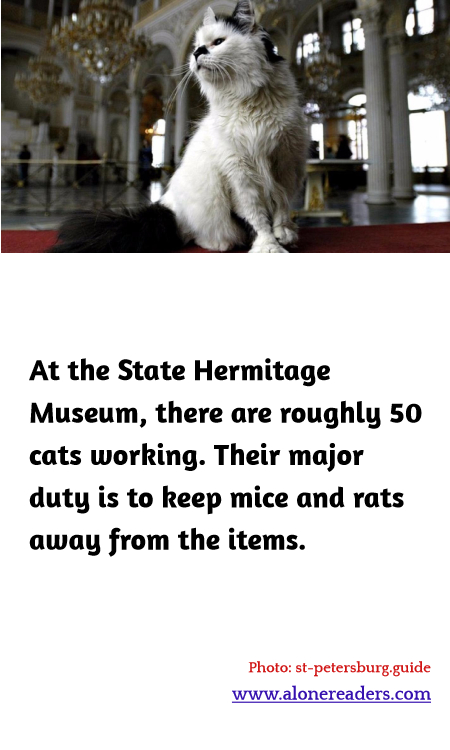
In the heart of St. Petersburg lies one of the world's oldest and largest museums, the State Heritage Museum, housing not only an invaluable collection of art but also an unusual team of furry guardians: cats. These feline employees play a crucial role in the preservation and protection of the museum's artifacts by keeping the premises free from rodents. The practice dates back to the 18th century when Empress Elizabeth, daughter of Peter the Great, ordered that cats be brought to the palace to safeguard its treasures. This tradition was later formalized by Catherine the Great who declared the Hermitage cats as the official guardians of the art galleries.
Today, approximately 50 cats reside in the museum's basement, each with the important task of patrolling for mice and rats. The museum staff carefully manage and care for these cats, ensuring they are healthy, vaccinated, and well-fed. The care of the cats has become so integral to the operations of the Hermitage Museum that there is even a designated employee responsible for the welfare of these feline workers. This person’s duties include feeding the cats, taking care of their health needs, and sometimes even managing adoptions for those cats that retire from their duties at the museum.
The presence of these cats is not only practical but has also become a beloved part of the museum’s culture. They are featured in the museum’s merchandise, and there are even special tours offered to visitors who wish to see the cats. The cats have also garnered quite a following on social media, symbolizing not just a quirky aspect of the museum’s day-to-day operations but also representing a living, breathing part of the Hermitage’s history. Their popularity helps raise awareness and funds for the museum and contributes to the preservation efforts of the museum’s vast collection.
Despite their humble position in the museum hierarchy, the Hermitage cats are indeed an essential part of the institution's legacy. Through their diligent patrols and undeniable charm, these cats provide an invaluable service by combining rodent control with cultural enrichment, thereby ensuring the preservation of one of the richest repositories of art and history in the world for future generations to enjoy.
