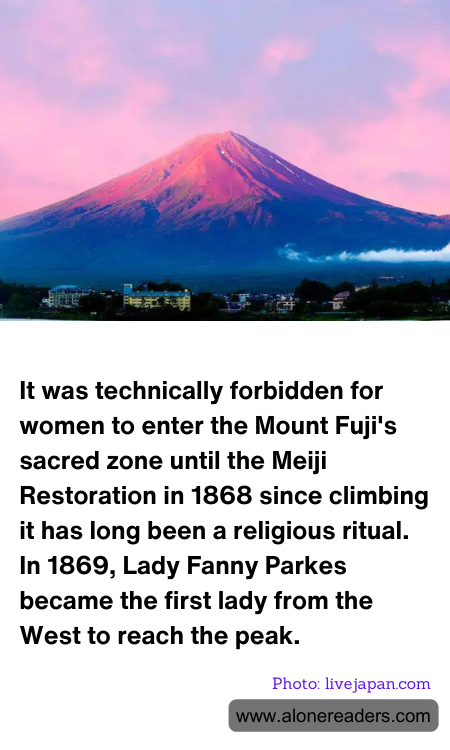
Mount Fuji, Japan’s tallest and most iconic mountain, has long been a site of cultural and religious significance, drawing thousands of pilgrims and visitors each year. Historically, however, the ascent to its sacred summit was not open to all. In a practice rooted deeply in Shinto beliefs, women were specifically barred from climbing to the peak. This prohibition was a part of broader social norms which restricted women's roles both in religious practices and in society at large. Despite its place as a center of worship for the kami (gods and spirits in Shinto belief), Mount Fuji was off-limits to women until the late 19th century.
The Meiji Restoration, which began in 1868, marked a significant period of rapid modernization and reformation in Japan. It was during this transformative era that the policies and societal norms began to change, including those concerning gender restrictions at religious sites. The year after the Meiji Restoration was enacted, in 1869, Lady Fanny Parkes, the wife of British diplomat Sir Harry Parkes, became the first Western woman to climb Mount Fuji. Her ascent was symbolic, marking not only a personal achievement but also reflecting the broader shifts in Japanese social policies.
Lady Parkes’ journey to the summit was a notable event and was contemporaneously recognized for its defiance of the longstanding tradition. Her successful climb encouraged future changes regarding access to the mountain, and since then, Mount Fuji has become accessible to everyone regardless of gender. Today, the mountain does not only continue to be a site of spiritual significance but also a symbol of inclusivity and equality.
The opening of Mount Fuji to women exemplifies the broader societal transformation towards gender equality in Japan. It's a reminder of the ongoing journey of social evolution and the reevaluation of traditional norms. This change paved the way for all people, regardless of gender, to participate in the spiritual and cultural practices associated with Japan’s revered mountain, enriching the experience for pilgrims and adventurers alike.
