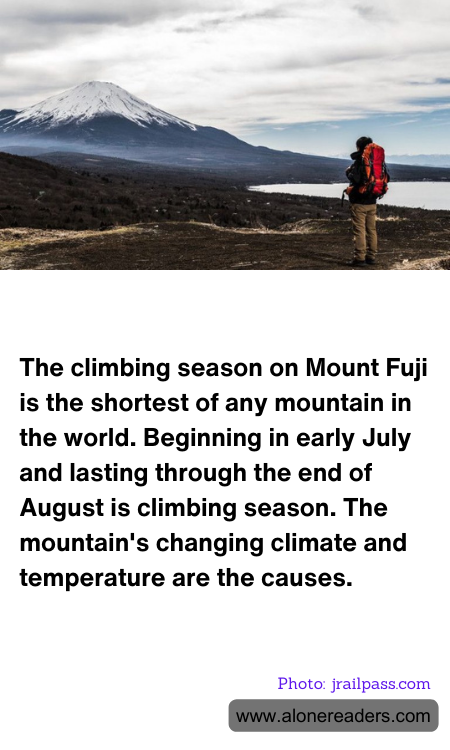
Mount Fuji, Japan's tallest peak, stands at 3,776 meters and is not only a prominent symbol of Japan but also a popular destination for climbers from around the globe. However, those looking to ascent this iconic volcano have a very narrow window to do so, as Fuji’s official climbing season is the shortest of any mountain in the world, spanning just from early July to the end of August each year.
This limited season is primarily due to the mountain's challenging weather conditions. For most of the year, Mount Fuji is capped with snow, and temperatures can be perilously low. Even during the summer months, when the climbing season is open, the weather can be highly unpredictable. Temperatures at the summit can be below freezing, and climbers often experience sudden bouts of severe weather, including thick fog and strong winds.
The short season also helps to preserve the mountain's environment, minimizing the ecological impact of the thousands who climb it each year. During these two months, the trails and facilities are also fully staffed, and safety measures are maximally enforced, providing support and emergency services if needed.
Climbing Mount Fuji is a significant cultural experience, reflective of the Japanese value of perseverance known as gaman. The hike itself, which can take anywhere from five to ten hours depending on the trail and the climber’s pace, offers not only demanding physical challenges but also spectacular views and a profound sense of accomplishment.
Despite the brief period when climbers can take to its slopes, Mount Fuji continues to attract a high volume of visitors each season, all eager to experience the majestic beauty and spiritual significance of this revered peak.
