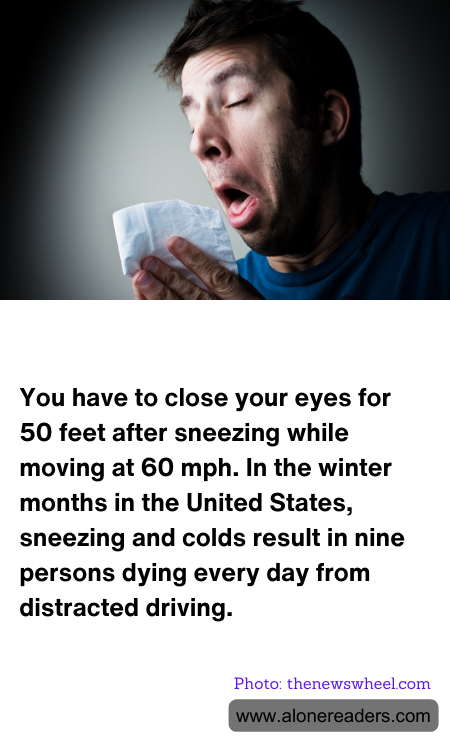
Driving at 60 miles per hour means covering approximately 88 feet per second. Therefore, if a driver closes their eyes for just one second after sneezing, they are effectively driving blindly for nearly 50 feet. This scenario can become even more dangerous during the winter months when road conditions are often compromised by ice, snow, and reduced visibility. The seemingly minor act of closing eyes post-sneeze can lead to significant risks, contributing to distracted driving statistics.
In the United States, winter ailments like colds and flu can increase the frequency of sneezing, inadvertently raising the potential for driving distractions. According to safety reports, distracted driving, including those caused by seemingly innocuous actions like sneezing, leads to numerous accidents and fatalities each year. The statistic that nine people die every day due to such distractions highlights the critical need for awareness and preventive measures.
Drivers can mitigate these risks by staying vigilant and prepared. Simple actions such as maintaining a greater following distance, slowing down during adverse weather conditions, and ensuring the vehicle is well-maintained can make a significant difference. Additionally, if a driver feels a sneeze coming on, it's advisable to slow down and, if possible, pull over safely to manage the sneeze without the risk of closing eyes while the vehicle is in motion.
Educational campaigns can further emphasize the hazards of driving while indisposed, whether by a sneeze or other distractions, and encourage safer driving practices. Awareness can prompt drivers to take preemptive actions, such as treating cold symptoms effectively, staying off the road when feeling under the weather, and recognizing the importance of focused driving. Each measure plays a crucial role in reducing the daily toll taken by distracted driving, especially during the challenging winter months.
