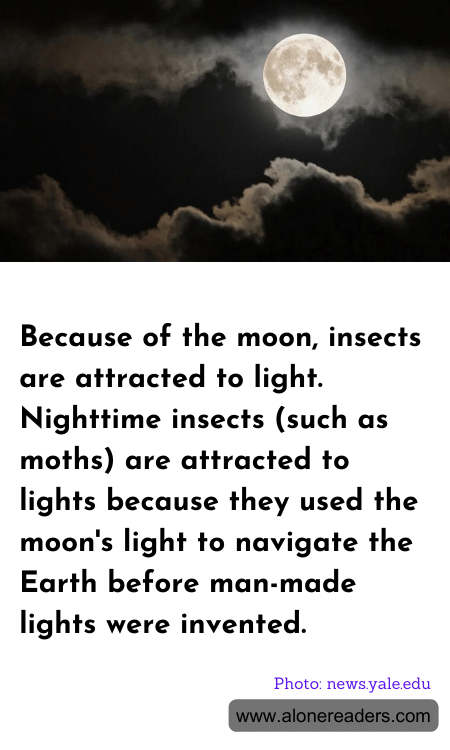
In the natural world, many nocturnal insects, including moths, use light sources for navigation. This phenomenon, known as positive phototaxis, involves insects being attracted to light. Historically, the moon served as the primary natural light source at night. Insects evolved to use the steady, reliable glow of the moon to guide their movements, a method that helped them maintain a straight flight path and avoid obstacles.
However, the advent of artificial lighting has disrupted this natural navigation system. Streetlights, porch lights, and other bright, man-made lights can confuse nocturnal insects. Unlike the moon, which is at a fixed point and provides a consistent reference, artificial lights are numerous and scattered across various points, leading different species to fly toward them. This mistake often proves fatal as it exposes insects to predators or causes them to expend energy without the reward of food, mating opportunities, or safe habitats.
Furthermore, the attraction to artificial light has broader ecological ramifications. It not only disrupts the life cycles and feeding patterns of the insects themselves but also affects the species that prey on them. The alteration in insect behavior due to light pollution can lead to imbalances in local ecosystems. For instance, bats and night-birds that feed on insects may find their food sources unpredictably concentrated around human habitats where artificial lights are prevalent.
Moreover, scientific research suggests that light pollution could also interfere with the reproductive cycles of insects. Many insects rely on natural light signals, such as the intensity of moonlight or the length of night, to trigger behaviors like mating or laying eggs. Artificial lights can obscure these signals, leading to decreased reproductive rates, which over time could contribute to declines in insect populations.
Ongoing efforts to mitigate the effects of light pollution include the use of insect-friendly lighting, such as lights that emit wavelengths less attractive to insects, and the strategic placement of lights to minimize disturbances to wildlife. Additionally, campaigns to raise awareness about the impact of light pollution on ecosystems encourage communities to adopt practices that limit unnecessary nighttime illumination. These measures are crucial in preserving not only the natural behaviors of insects but the overall health of the environment.
