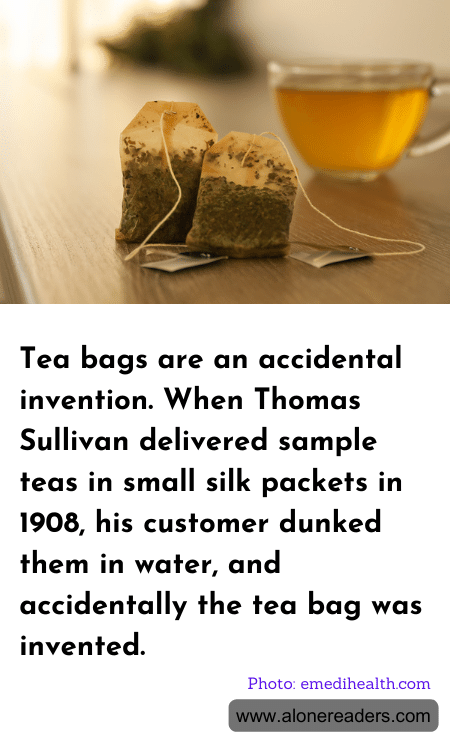
The invention of the tea bag, a staple in many households around the world, happened by serendipity, rather than by deliberate design. In 1908, a New York tea merchant named Thomas Sullivan sought an efficient way to send samples of tea to his customers. The traditional method involved bulky and expensive tins, which were not only heavy but also not cost-effective for sending small amounts of tea. Sullivan's innovative approach was to pack the loose tea leaves in small, hand-sewn silk bags, which he then mailed to his potential buyers.
To Sullivan’s surprise, his customers misinterpreted these small silk packets: instead of opening them and emptying the tea leaves as intended, they simply dropped the entire bag into hot water. This unintentional method of brewing tea turned out to be incredibly convenient, eliminating the need for a teapot and simplifying the process of disposing of used leaves. Recognizing the potential of this new method, Sullivan swiftly adapted. He improved the design of his accidental invention by switching from silk to gauze, which was more porous and suitable for brewing tea.
This innovation quickly caught on, revolutionizing the way tea was consumed. It offered a quicker, cleaner, and more convenient alternative to traditional loose-leaf brewing methods. The humble tea bag was especially popular among office workers and others who sought a fast, no-fuss method to enjoy their daily brew during their brief breaks.
As the tea bag gained popularity, further refinements were made, including the switch from gauze to the more permeable and less expensive paper. The shape of tea bags also evolved from a simple pouch to various forms, including rectangular and circular designs, to optimize the infusion process. Manufacturers began to seal tea bags by machine to meet the increasing demand. An additional innovation, the string and tag, was introduced in the 1940s, allowing tea drinkers to easily remove the bag from hot water once steeping was complete, further simplifying the tea-making process.
Today, tea bags are available in a myriad of flavors, blends, and types, catering to a diverse array of tastes and preferences, extending far beyond the simple black teas that were first introduced by Sullivan. Whether enjoyed in a quiet moment at home or during a busy day at work, the tea bag remains a symbol of convenience, simplicity, and the serendipitous nature of some of the world's best inventions. So, while the tea bag may have been born from a misunderstanding, its enduring presence in kitchens and cafes across the globe is no accident.
