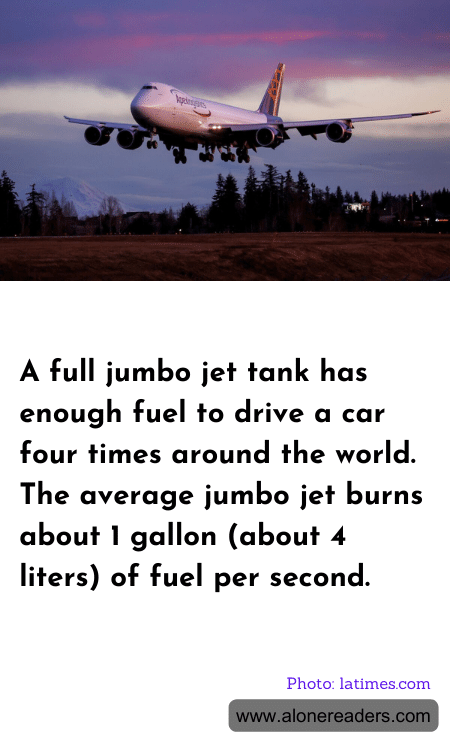
The scale of fuel consumption by jumbo jets, in comparison to the amount of fuel used by the average car, underscores the immense energy requirements of modern air travel. A jumbo jet, fully fueled, carries an astounding amount of fuel that, theoretically, could allow a car to travel around the Earth four times. This fact illuminates the vast differences in fuel capacity and consumption between different modes of transport.
Specifically, during flight, a jumbo jet burns approximately 1 gallon of fuel every second. With flights often lasting several hours to over a dozen, depending on the distance covered, the total fuel consumption for a single flight can be astronomical. This high rate of fuel use reflects not only the power needed to keep such large aircraft in the sky but also the efficient nature of aviation engineering that allows hundreds of passengers to be transported across vast distances relatively quickly.
For comparison, the average car is significantly more fuel-efficient per passenger mile, if one only counts the fuel consumption without taking into account the number of passengers or the speed of travel. Cars generally consume fuel at much slower rates, with modern vehicles averaging about 25 miles per gallon on the highway, which is far more efficient on a per-mile basis than the fuel burn of a jumbo jet. However, on a per-passenger basis, the equation alters considerably when aircraft are at full capacity, effectively transporting hundreds of passengers in scenarios that contrast sharply with the often single-occupant car trips.
Such comparisons between modes of transport can help in understanding the vast scale of infrastructure and energy use in contemporary global transit. They also highlight the challenges faced in efforts to make transportation more sustainable and less environmentally damaging. As the world gradually shifts to more sustainable energy sources, the enormous energy demand of air travel presents both a challenge and an opportunity for innovation in aerospace engineering, potentially leading to developments that could reduce the carbon footprint of flying significantly.
Understanding these quantitative aspects of fuel use is fundamental to addressing broader issues of resource utilization, environmental impact, and the future of transportation on a global scale. It forces a crucial discussion about efficiency, sustainability, and how society chooses to allocate its resources to accommodate the needs of globalization and economic development while confronting the environmental crises of the modern age.
