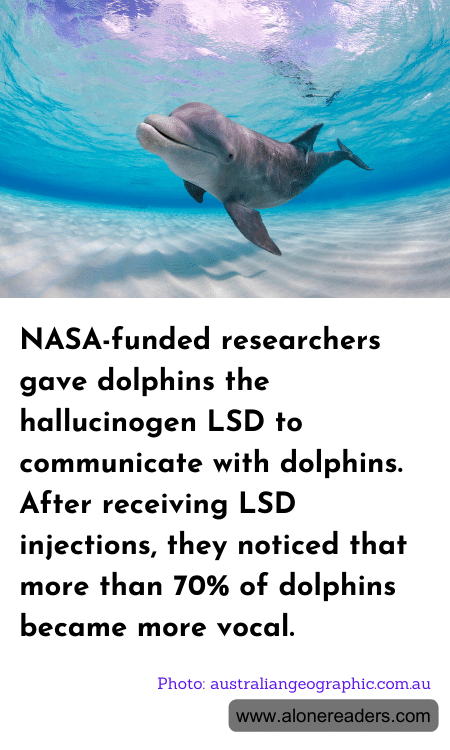
In a quest to bridge the interspecies communication gap, NASA-funded researchers embarked on an extraordinary experiment in the 1960s: administering LSD to dolphins to potentially enhance their ability to communicate. Led by neuroscientist John C. Lilly, the team was intrigued by the sophisticated echolocation abilities and complex social structures of dolphins, hypothesizing that the psychoactive effects of LSD might stimulate or alter their communication patterns.
The experiment involved a group of bottlenose dolphins, which were given carefully measured doses of LSD. Observations recorded after the administration of the drug indicated that more than 70% of the dolphins showed a noticeable increase in vocal activity. This vocalization varied, ranging from increased frequency and variety of clicks and whistles to more prolonged vocal displays that suggested a heightened state of responsiveness or possibly altered states of consciousness.
Lilly and his team postulated that these changes in vocal behavior could indicate that the dolphins were attempting to communicate more effectively or differently. The core idea was that by temporarily altering the brain chemistry of these dolphins, researchers could gain deeper insights into the cognitive processes related to dolphins' communication and social interaction.
Despite the initial promise, the scientific community met the methodology and results with skepticism. Ethical concerns also rose to the forefront, overshadowing the scientific findings. Questions about the implications of using psychoactive substances on animals, the interpretation of the observed behaviors, and the overall welfare of the dolphins were critically discussed.
In hindsight, while Lilly's experiment was groundbreaking in its approach to understanding cetacean communication, the scientific validity and ethical considerations of such studies were heavily challenged. Today, researchers continue to explore dolphin communication and cognition, albeit with more ethically sound and scientifically robust methodologies, hoping to unlock the mysteries of these highly intelligent marine creatures without resorting to controversial practices. The urge to understand and possibly communicate with other species remains a fascinating field of study, reflecting our broader desire to connect with and understand the natural world around us.
