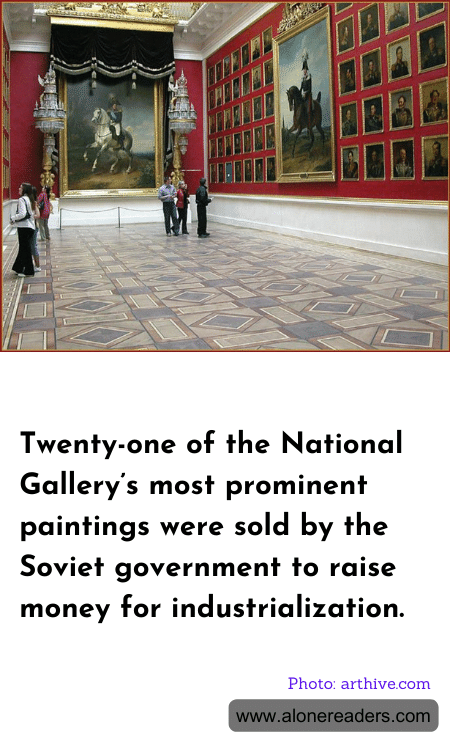
In a historic move driven by the desire to fund industrial advancement, the Soviet government made the controversial decision to sell twenty-one of the most eminent paintings from the National Gallery’s collection. This decision was part of a larger strategy to acquire foreign capital necessary for the ambitious Five-Year Plans, which aimed at transforming the Soviet Union from a primarily agrarian society into an industrial superpower. The paintings sold were among the finest in the museum's collection, and their sale remains a striking example of how economic needs can impact cultural heritage.
The transaction included masterpieces by renowned artists, whose works were considered national treasures. This bold step not only reflected the dire economic straits faced by the Soviet Union at the time but also highlighted the government’s readiness to sacrifice cultural assets to meet its developmental goals. The decision was met with both domestic and international outcry as critics argued that it compromised the country's cultural legacy for short-term economic gains.
Despite the controversy, the sale proceeded and the artworks were dispersed across various private collections and museums worldwide. This dispersal further fueled an ongoing debate about the stewardship of national cultural assets and the responsibility of governments to preserve such assets for future generations. On one hand, the influx of funds from the sale contributed significantly to the Soviet industrialization efforts, playing a role in the country’s transformation. On the other hand, it marked a loss of cultural wealth that many felt was irreplaceable.
The consequences of these sales are still felt today, as the art world occasionally witnesses the re-emergence of these masterpieces in auctions and exhibitions. Each appearance opens old wounds and sparks fresh debates about the balance between economic policy and cultural preservation. This event serves as a poignant reminder of the lasting impact that economic decisions can have on national heritage, prompting countries worldwide to reflect on how they prioritize and protect their cultural assets.
