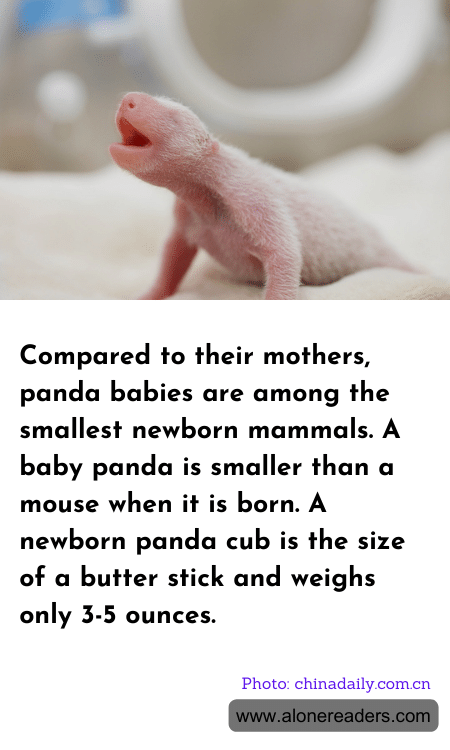
Among the array of mammalian newborns, panda babies are particularly intriguing due to their surprisingly tiny stature at birth. When compared to their mothers, these cubs are extraordinarily small, making them one of the smallest newborn mammals relative to the adult size of their species. In fact, when born, a baby panda is even smaller than a mouse, defying what one might expect from the offspring of such large and charismatic creatures.
A newborn panda cub, roughly the size of a stick of butter, weighs merely 3 to 5 ounces. This is a stark contrast to the substantial weight of an adult panda, which can be anywhere between 150 to 275 pounds. The reason behind their minuscule birth size lies in the evolutionary adaptations of the species. Pandas have a relatively short gestation period of about 134 to 163 days, which is quite brief for such a large mammal. During this period, most of the cub's development occurs outside the womb, making the birth size remarkably small.
This small size at birth allows the panda mother to conserve energy during pregnancy, which is essential given the low nutritional value of their primary food source, bamboo. Bamboo, while abundant, provides relatively little energy, and pandas must consume a substantial amount to meet their energy needs. By giving birth to a tiny cub, a panda mother can manage her energy more effectively, dedicating less to pregnancy and more to foraging and milk production after the cub's birth.
Raising such a vulnerable cub requires intensive care. Panda mothers are highly attentive, keeping the tiny infant warm and well-fed in the safety of the den. The cub's early life is marked by rapid growth, funded by the rich milk provided by its mother, which allows it to grow significantly in size and strength within the first year.
The incredibly small size of newborn pandas is a remarkable example of how evolutionary traits can develop in response to dietary constraints and environmental pressures. Despite their initial vulnerability, these cubs grow to become the large, robust bears that are beloved around the world, symbolizing wildlife conservation efforts globally. Their journey from a fragile, minuscule newborn to a formidable adult is one of the most fascinating developmental stages in the animal kingdom.
