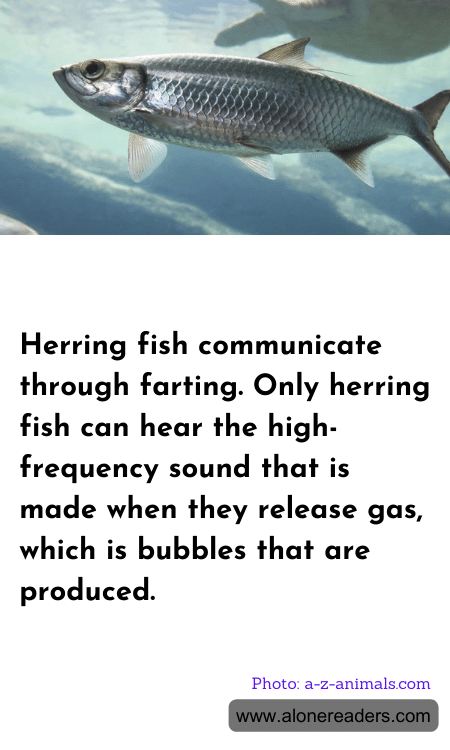
Herring fish have developed a unique method of communication that distinguishes them from most other fish species. They communicate through the release of gas, or more informally, farting. This peculiar form of communication involves the expulsion of air from their swim bladders, which produces a high-frequency sound. Curiously, this sound is not perceptible to human ears; only herring can detect these noises due to their specialized hearing abilities.
The bubbles produced during this process have a distinct noise that serves as a signal among herring schools. This ability likely serves a crucial role in their survival, aiding group cohesion in the often-turbid waters where they live. Particularly at night, when visibility is minimal, this method of communication helps maintain school structure and enables them to coordinate movements more effectively.
This form of communication was initially puzzling to scientists. The discovery came about when researchers were investigating the sounds in tanks of captive herring. Initially, it was unclear what was causing the mysterious high-pitched noises until further studies revealed that it was the herring releasing gas in a controlled manner. This realization marked a significant development in understanding the complexities of fish communications.
Further investigations into these "farting" sounds have suggested that they could act as a form of vocabulary, potentially conveying different messages based on the frequency or length of the noise. However, the specific content and variety of these messages are still subjects of ongoing research. The phenomenon underscores a broader principle in animal behavior: communication methods can be highly adapted to specific environmental needs and can occur through some remarkably unconventional means. This discovery not only adds an intriguing layer to our understanding of herring behavior but also highlights the diversity of communication strategies in the animal kingdom.
