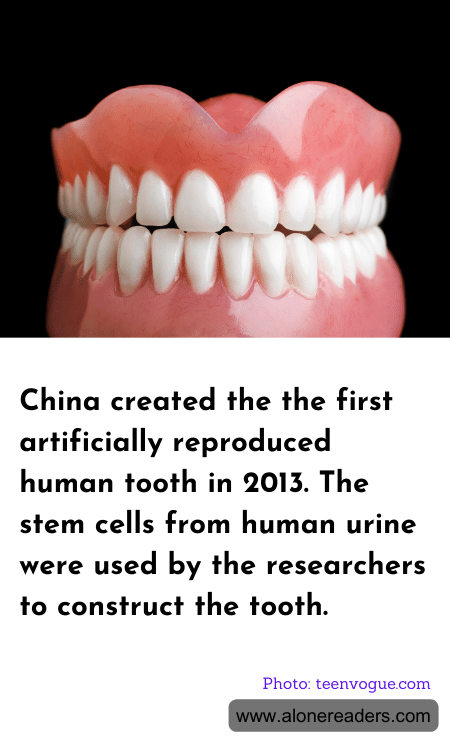
In 2013, a groundbreaking scientific achievement was reported by researchers in China, marking a significant advancement in the field of regenerative medicine. They successfully created the first artificially reproduced human tooth using an unconventional source of stem cells: human urine. This innovative approach not only showcased a novel use of stem cells but also opened up new avenues for dental restoration and regeneration therapies.
The process involved extracting stem cells from human urine and then converting these cells into induced pluripotent stem cells (iPSCs). These iPSCs possess the ability to differentiate into many different types of tissues, including dental tissues. The researchers then cultivated these cells in a laboratory to mimic the natural growth environment of a tooth, using a mixture of growth factors and a scaffold to give shape and support to the developing structure.
The resultant tooth-like structure was reported to have dental pulp, dentin, enamel space, and an enamel organ, closely resembling a natural tooth in its composition and structure. However, it is important to note that the hardness and durability of the artificially grown tooth were still inferior to that of a natural tooth. Moreover, the use of urine as a source of stem cells raised ethical and practical concerns regarding the efficiency and safety of such methods for clinical applications.
Despite these challenges, the creation of a bioengineered tooth using stem cells from urine represents a fascinating example of how biological waste products can be repurposed for regenerative therapies. It also underscores the ongoing need for further research to refine these techniques, improve the functional properties of bioengineered tissues, and ensure they are safe for use in humans.
This development holds promise not only for those in need of dental repairs but also signals potential wider applications in regenerative medicine, where different types of tissues and organs may one day be repaired or replaced using similarly innovative methods. As research progresses, this could lead to tailored treatments for a myriad of dental and medical conditions, reducing the need for donor organs, decreasing surgical risks, and paving the way for more personalized and accessible healthcare solutions.
