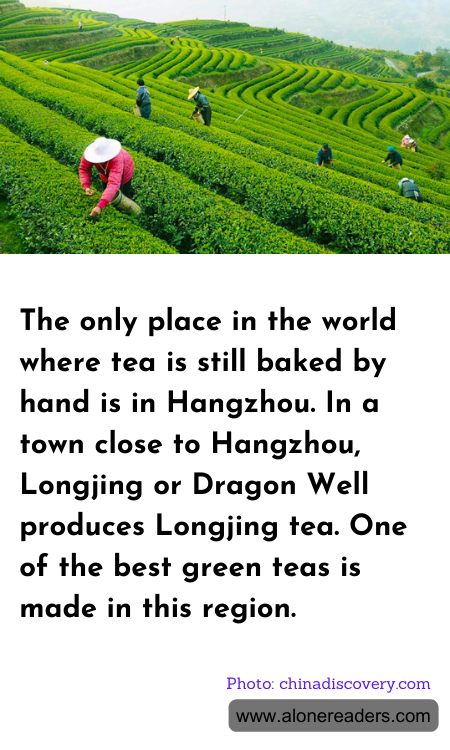
In the verdant expanses of Hangzhou, a captivating process unfolds that preserves a centuries-old tradition unique to this part of the world. Here, in a small, scenic town near Hangzhou called Longjing, or Dragon Well, the art of hand-baking tea leaves continues to thrive. Longjing is renowned not only for its picturesque landscapes but also for producing what is considered one of the finest green teas globally—Longjing tea.
The meticulous process of making Longjing tea is as much an art as it is a science. Unlike most modern tea production which relies heavily on automated machinery, in Longjing, the tea leaves are still pan-fired by hand. This traditional method involves roasting the freshly plucked leaves in large pans over a fire, a delicate process that requires precise temperature control, timing, and movement. The skilled tea masters use their bare hands, protected only by cloth gloves, to stir the leaves continuously. This prevents the leaves from burning while ensuring they are evenly heated, which is crucial for developing the tea's chestnut flavor and its signature flat appearance.
The artisans' ability to control the fire and manipulate the temperature plays a pivotal role in the final quality of the tea. It helps in deactivating the enzymes in green tea that can lead to oxidation, which is why Longjing tea retains a vibrant green color and a rich, unoxidized flavor profile. Each batch of leaves is carefully monitored and adjusted based on its aroma and texture, a testament to the tea master's expertise and deep understanding of the craft.
The significance of hand-baking extends beyond the creation of a premium product; it reflects a deep-seated reverence for tradition and a commitment to preserving a cultural heritage. This labor-intensive approach not only imparts a distinct character and complexity to the tea but also tells a story of a community's dedication to excellence and authenticity.
Visitors to Longjing are often struck by the serene beauty of the tea gardens that sprawl across the hillsides. The experience of watching tea masters at work is both mesmerizing and educational, offering insights into the cultural significance of tea in Chinese society and the profound mastery involved in its production.
In a world that increasingly favors speed and automation, the hand-baked Longjing tea stands out as a reminder of the value of craftsmanship and the taste of tradition. For tea connoisseurs and casual drinkers alike, Longjing tea offers not just a soothing beverage, but an enriching glimpse into a fading art, making each sip a more treasured experience.
