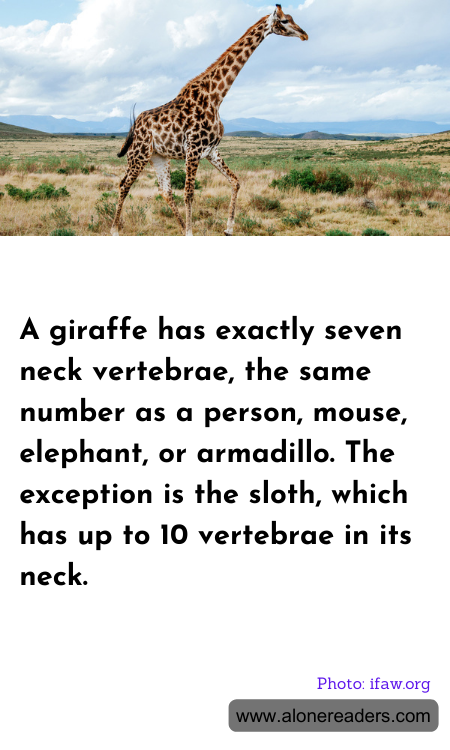
Despite the vast differences in neck length and size among various mammals, a fascinating uniformity exists within an unexpected area: the number of neck vertebrae. Giraffes, known for their extraordinarily long necks, share the same number of neck vertebrae—seven—as many other mammals, including humans, mice, elephants, and armadillos. This uniformity is explained by the basic vertebrate blueprint laid out in early developmental stages. Evolution has manipulated the size and thickness of these vertebrae rather than their number to adapt to different ecological niches and functionalities.
The giraffe’s neck vertebrae are each elongated, sometimes measuring over ten inches long, which contributes to its towering height and allows it to reach high foliage that other ground-based competitors cannot. In contrast, in humans and other mammals with shorter necks, these vertebrae are much smaller. The lengthening of the vertebrae in giraffes is a prime example of adaptation where modifying the size while retaining the number allows for structural strength and flexibility.
An interesting exception to this commonality is the sloth, which can have anywhere from eight to ten cervical vertebrae. This variation helps support their unique lifestyle. The additional vertebrae contribute to the sloth’s ability to rotate its head up to 270 degrees, an essential feature for an animal that spends much of its time hanging upside down from tree branches. This enhanced neck flexibility aids in scanning for predators and reaching food in their arboreal habitat.
This intriguing difference in vertebral makeup between sloths and other mammals underscores the delicate balance evolution plays between standard anatomical templates and the tweaks needed for specific ecological adaptations. Despite these variations, the retention of seven neck vertebrae across such a diverse range of animals highlights a remarkable example of evolutionary conservation, illustrating how natural selection shapes but also builds upon ancient anatomical foundations to cater to diverse environmental demands.
