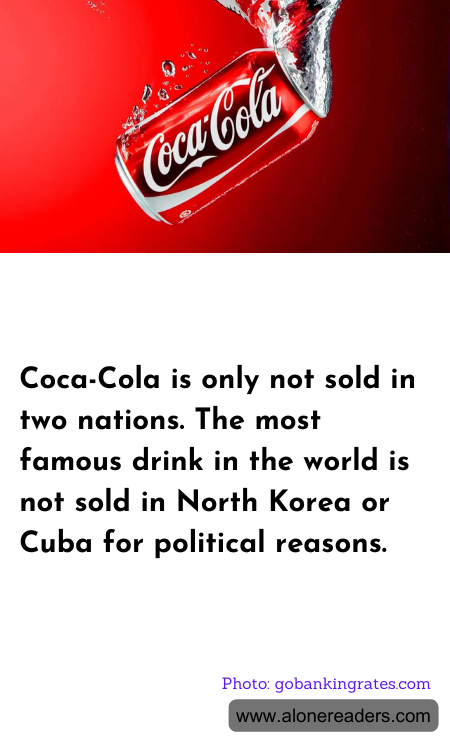
Coca-Cola, the iconic global beverage, remarkably is unavailable in two countries: North Korea and Cuba. This exclusion is primarily due to longstanding political tensions and trade embargoes involving these nations and the United States, where Coca-Cola is headquartered. The origins of this absence date back to the Cold War era, defining a significant period of geopolitical strife between communist and capitalist states.
In North Korea, the situation is compounded by the country's severe isolationist policies and self-reliance philosophy known as Juche. These policies restrict most imports and maintain tight control over the economy, thereby preventing the entry of international brands like Coca-Cola. Meanwhile, in Cuba, while there was a brief period when Coca-Cola was sold after the communist revolution, the re-imposition of the US embargo in the 1960s ceased all imports of American products, including Coca-Cola.
Although nearby countries and territories enjoy the ubiquitous presence of Coca-Cola, these two nations stand as stark exceptions, making Coca-Cola a symbol not only of American cultural export but also of global political dynamics. Interestingly, in these countries, local or regional beverages occupy the market space that Coca-Cola fills elsewhere, reflecting a blend of cultural and political identity expressed through consumer choice.
The absence of Coca-Cola in North Korea and Cuba captures a fascinating intersection of commerce, culture, and geopolitics, illustrating how global businesses can be shaped by international relations and government policies. Thus, Coca-Cola's global proliferation and its absence in specific locales tell a broader story of economic and political epochs in our world's history.
