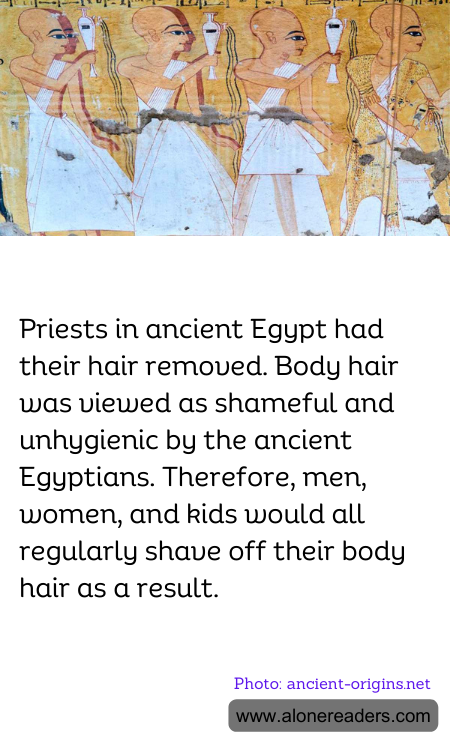
In ancient Egypt, priests held an esteemed position within society, serving as intermediaries between the gods and the people. One of the most distinctive aspects of their appearance was their complete lack of body hair, including the hair on their heads. This practice was rooted in the belief that body hair was not only unhygienic but also shameful. To maintain purity, priests would shave their bodies entirely, which helped to distinguish them from the rest of the populace and symbolized their commitment to cleanliness and religious purity.
The act of shaving was not limited to priests alone; it permeated throughout Egyptian society. Both men and women, regardless of their status, would regularly remove their body hair. Even children were introduced to this practice. Such grooming habits were closely tied to the Egyptian ideal of beauty and cleanliness, which was integral to their culture and daily living. The hot and arid Egyptian climate might have also played a role in this custom, as less hair meant more comfort in the heat.
Moreover, the practice of hair removal extended beyond aesthetic appeal and comfort. It had significant religious implications as well. For the priests, being completely hairless was a means of purification, essential for performing sacred rituals and entering holy places. It was a way of preparing their bodies to be pure vessels that could communicate with and serve the gods without the interference of physical impurities.
The tools used for this purpose were rudimentary yet effective. Sharpened stones, later replaced by metal blades, were utilized to keep the body free of hair. Over time, these methods evolved, but the cultural and religious significance of remaining hairless remained a constant feature among the priests of ancient Egypt. This practice set them apart, visually reinforcing their sacred and ordained status within the highly stratified society of ancient Egypt.
