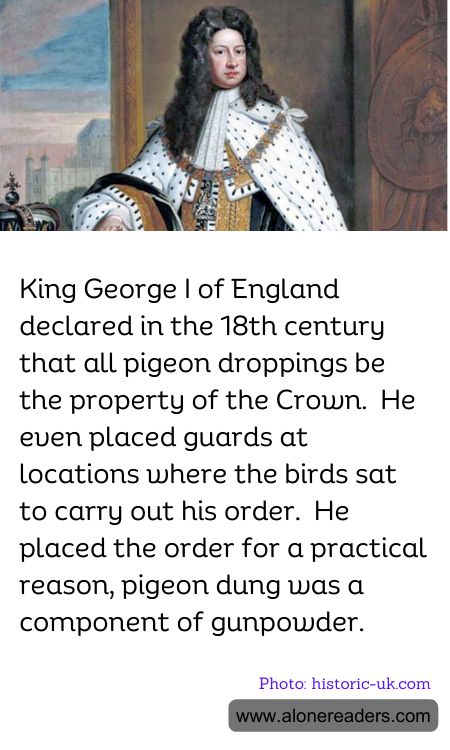
In the 18th century, King George I of England made an unusual yet strategic declaration that all pigeon droppings were to be considered the property of the Crown. This royal decree was not without reason; pigeon dung, rich in saltpeter (potassium nitrate), was a vital ingredient in the manufacture of gunpowder, which was critical for the military at the time.
To ensure the decree was enforced, King George I even went as far as placing guards at popular roosting sites for pigeons. These guards were tasked with collecting the pigeon droppings, a resource that, seemingly mundane, had considerable value in the production of gunpowder. The collection and control of pigeon droppings thus became a matter of national importance, underlying the lengths to which governments would go to secure resources critical to national security and military strength.
The control over such a peculiar resource as pigeon droppings highlights the diverse and often surprising aspects of historical governance and resource management. This decree by King George I not only underscores the strategic importance of seemingly trivial substances but also reflects the broader practices of resource control typical of the era. Today, while the use of pigeon droppings in gunpowder is obsolete, the story remains a fascinating glimpse into the lengths of royal command and control, as well as the innovative, if not odd, approaches to wartime resource management in historical contexts.
