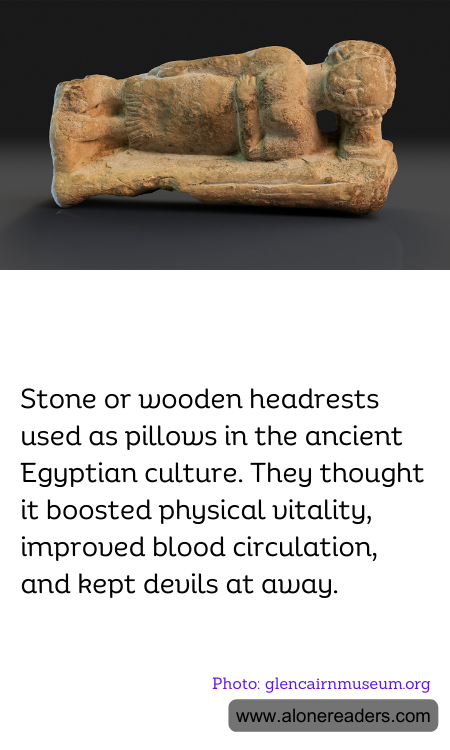
In the intriguing world of ancient Egyptian culture, the humble pillow was far from the soft, fluffy headrests we use today. Instead, Egyptians often utilized headrests made from stone or wood. These were not designed for plush comfort but were believed to host a range of benefits both spiritual and physical. Distinctively shaped with a flat top supported by a curved neck on a stable base, these headrests reflect a unique aspect of ancient lifestyle and beliefs.
To begin with, physical vitality was a principal concern for the Egyptian people, who were advanced in their understanding of the human body. They perceived that using these hard headrests helped in maintaining the body’s vigor and youthfulness. It was commonly believed that these headrests could improve blood circulation. This belief might have stemmed from the idea that elevating the head above the body in a certain way helped maintain an unobstructed flow of blood, contrasting the modern awareness of circulation dynamics.
Moreover, the spiritual aspect of these headrests was deeply woven into Egyptian culture. The ancient Egyptians were profoundly spiritual and often took measures to protect themselves from malevolent spirits and demons. The stone or wooden headrests were not merely functional but held symbolic meanings, acting as a tool to ward off evil. These pillows were thought to shield the sleeper throughout the night, a time when they were most vulnerable to attacks from spirits. Some headrests were even inscribed with spells or decorated with images of protective deities to amplify their protective powers.
Aesthetically, while they might seem uncomfortable, these headrests were crafted with remarkable skill and artistry. The choice of materials like wood and stone not only offered durability but also allowed artisans to create intricate designs and inscriptions. This reflects the Egyptians’ appreciation for art and their effort to integrate beauty and function, even in everyday objects.
Despite their hard composition, these ancient Egyptian headrests symbolize a fascinating blend of science, spirituality, and art. By studying these artifacts, we gain insight into how the Egyptians approached health, protection, and aesthetics, drawing a vivid picture of their daily lives and beliefs which continue to captivate the modern imagination.
