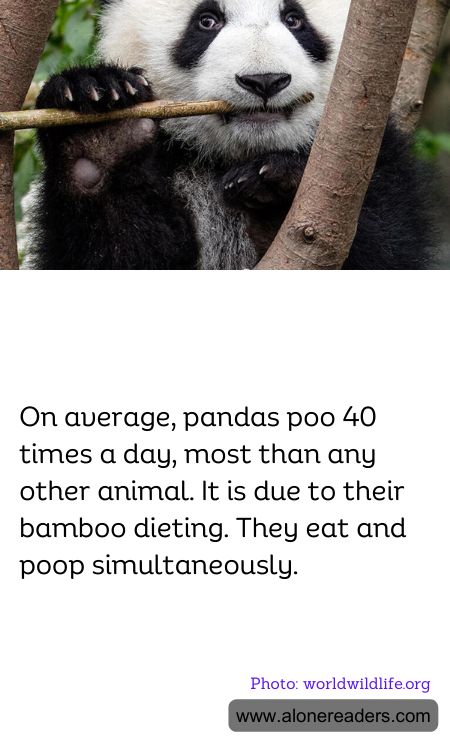
Pandas are one of the most charismatic creatures on the planet, often capturing public imagination through their playful antics and adorable appearance. However, one lesser-known yet fascinating aspect of their lives is their remarkable digestive system. Remarkably, pandas can defecate up to 40 times per day, making them one of the most frequent poopers in the animal kingdom. This frequent bowel activity is closely tied to their unique dietary habits.
The giant panda's diet is predominantly made up of bamboo, which they consume in massive quantities daily. An adult panda can eat 12-38 kilograms of bamboo every day, depending on what part of the bamboo they are consuming. Bamboo, while abundant, offers relatively low nutritional content. Pandas have evolved to eat this fibrous, low-nutrient plant matter by developing a highly specialized digestive process.
Despite belonging to the order Carnivora, pandas have a digestive system that is largely typical of herbivores. Their gastrointestinal tract is relatively short and lacks the complexity typical of many herbivorous animals which have stomachs specially adapted to break down fibrous plant material efficiently. Consequently, pandas only digest about 17% of the bamboo they consume. The rest must be expelled from the body, leading to the high frequency of their bowel movements.
The need to consume and process such large amounts of bamboo also means that pandas are almost constantly eating and defecating simultaneously. They spend around 10 to 16 hours a day feeding and can defecate while eating or moving about their environment. This continuous intake and expulsion of food are vital for maintaining their energy requirements and overall health.
Pandas’ feces are relatively loose and fibrous, similar in consistency to horse manure. This is due to the undigested cellulose from the bamboo. Each bowel movement produces a substantial quantity of waste, which decomposes quickly and contributes to the nutrient cycle within their forest habitats.
In understanding these aspects of panda biology, researchers gain insights into their health, diet preferences, and habitat needs, which is crucial for conservation efforts. Despite their low reproductive rate and the specific challenges presented by their diet, efforts such as habitat preservation and breeding programs have helped increase the population of this once-endangered species. Thus, even the peculiar aspects of their biology, like their frequent defecation, play a role in shaping the conservation strategies that contribute to the survival of the giant panda.
