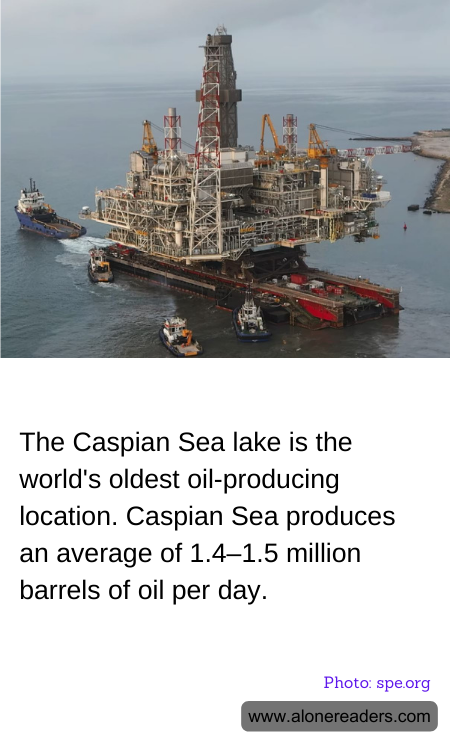
The Caspian Sea, often referred to as the world's largest inland body of water, doubles as the oldest oil-producing region on the planet. This massive lake, bordered by five countries—Russia, Kazakhstan, Turkmenistan, Iran, and Azerbaijan—plays a crucial role in the global energy market due to its rich natural resources, especially its vast oil reserves.
Historically, the Caspian Sea has been exploited for its oil since the 10th century, but commercial production began in the mid-19th century, primarily in and around Baku, now the capital of Azerbaijan. The region was then a focal point during the industrial boom, significantly influencing the global oil market and helping to establish the oil industry as we know it today. The development of oil fields in Baku drew investments and technical advancements, laying down the infrastructure necessary for future large-scale exploitation.
Today, the Caspian Sea region produces an impressive average of 1.4–1.5 million barrels of oil per day. The oil fields in the Caspian basin are among the oldest exploited fields in the world, with the area still holding vast untapped reserves estimated to hold billions of barrels. The significance of these reserves cannot be overstated, as they contribute substantially not only to the economies of the bordering nations but also to energy security and market dynamics globally.
Moreover, the geopolitics of the Caspian Sea oil are complex, involving not only the littoral states but also major external powers interested in the energy routes and reserves. The legal status of the Caspian Sea itself has been a subject of contention, primarily because of its rich natural resources. The agreement reached in 2018 by the five littoral states has been pivotal in settling long-standing disputes, thereby paving the way for new development projects and increased cooperation in oil extraction and transportation.
Environmental concerns, however, emerge as critical challenges. The extraction and transportation of oil in the region have raised significant concerns regarding pollution and ecological health. The unique biodiversity of the Caspian Sea is at risk due to the extensive oil drilling and its associated hazards, such as oil spills and industrial waste.
In conclusion, the Caspian Sea remains a central player in the global oil industry. Its vast resources and strategic position continue to attract international attention and investment. Balancing the economic benefits of oil production with environmental conservation and sustainable practices will be critical for the region moving forward, ensuring that this ancient source of oil does not become a modern cautionary tale.
