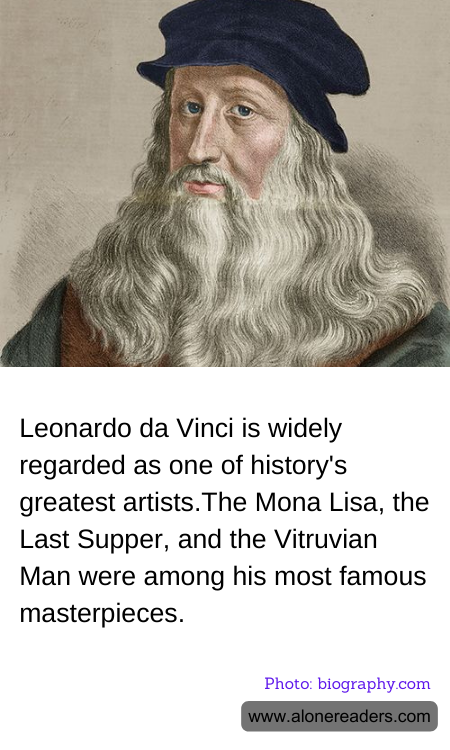
Leonardo da Vinci, a polymath of the Renaissance era, significantly impacted the realms of art and science, leaving a legacy that still resonates today. Renowned for his meticulous attention to detail and his dedication to realistic representation, da Vinci elevated the standards of both portrait and religious art, influencing generations of artists to come.
The Mona Lisa, perhaps the most recognized painting in the world, is celebrated for its enigmatic expression and the sophistication of its subject's gaze. Painted between 1503 and 1506, and possibly continuing until 1517, this masterpiece encapsulates Leonardo's unparalleled ability to capture the complexity of human emotions and his mastery in using the sfumato technique to create soft transitions between colors, enhancing the three-dimensional feel of the work.
Another significant contribution from Leonardo's hand is The Last Supper, a mural that depicts the moment just after Jesus reveals that one of his disciples will betray him. Located in Milan's Convent of Santa Maria delle Grazie, the painting is notable for its dramatic layout and the psychological depth of each figure. The use of perspective and the arrangement of the figures in groups of three along a long table adds a dynamism that was groundbreaking at the time. Despite considerable damage and numerous restorations, it remains an icon of Biblical narratives, demonstrating Leonardo's keen insight into human nature and his skill in conveying narrative through art.
The Vitruian Man, meanwhile, is a testament to Leonardo's fascination with the human body and the interrelation between art and science. This drawing illustrates the ideal human body proportions as described by the ancient Roman architect Vitruvius, embodying Leonardo's belief that "the workings of the human body are an analogy for the workings of the universe."
Da Vinci's intensive studies of human anatomy, which involved detailed sketches of human bones, muscles, and organs, were not only advanced for his time but also laid foundational knowledge for future anatomical studies. Besides anatomy, his studies spanned across botany, hydrodynamics, and aerodynamics, illustrating a prodigious intellect fueled by insatiable curiosity about the natural world.
Leonardo da Vinci's influence on art and science is profound. His works, characterized by innovative techniques and deep thought, not only pushed the boundaries of what was possible in his time but also left a substantial legacy that continues to inspire curiosity and creativity in the fields of art and science alike. His treatises on painting, his anatomical sketches, and his conceptual drawings for various machines testify to a mind that saw no boundary between artistic and scientific endeavors, making him a true "Renaissance man" whose works and thoughts transcend the era he lived in.
