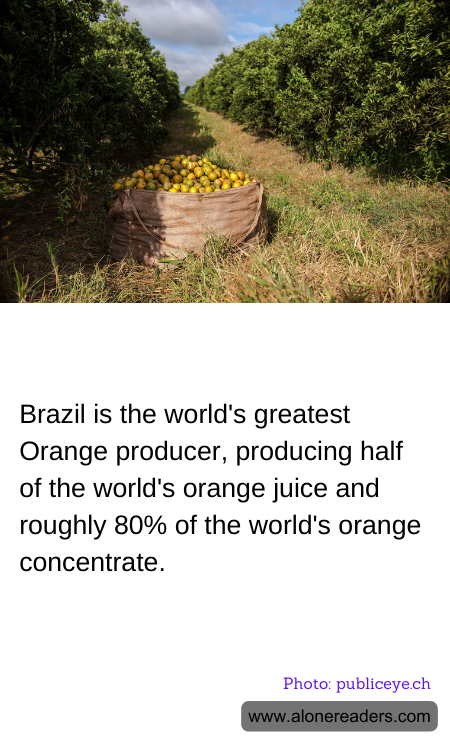
Brazil stands as an agricultural colossus, particularly in the realm of citrus production, with oranges being one of its most prolific outputs. This South American nation is not just the largest producer of oranges but also dominates the global market in orange juice, supplying about half of its total volume. Furthermore, Brazil is responsible for approximately 80% of the world's orange concentrate. This impressive feat is largely concentrated in the region of São Paulo, which is the heart of Brazil's orange industry.
The country's climate and geography are ideally suited for citrus growth, with the warm temperatures and ample rainfall creating perfect conditions for orange trees to thrive. This has allowed for year-round production cycles, unlike in more temperate regions where citrus production can be seasonal. Additionally, Brazil has invested heavily in agricultural technology and infrastructure, helping to increase yield and efficiency in orange farming and processing.
Brazil's dominance in the orange market has significant implications for the global economy. The nation's ability to produce large quantities of high-quality oranges and orange products at competitive prices makes it a pivotal player in international trade discussions related to agriculture. Within the country, the orange industry is a key source of employment and economic stability for thousands of farmers and workers involved in its complex supply chain, from cultivation to processing and exportation.
Moreover, the global reliance on Brazilian orange juice and concentrate poses challenges and opportunities. On one hand, it highlights the need for sustainable farming practices to ensure that production can meet international demands without jeopardizing the environmental health of the regions involved. On the other hand, it offers Brazil a powerful leverage in trade negotiations and foreign relations, as countries dependent on its orange exports may seek favor through various diplomatic avenues.
In conclusion, Brazil's role as the world's top orange producer has far-reaching effects on both its national economy and the international market. The ongoing success of this sector will depend on continued innovation in agriculture, responsible environmental management, and strategic trade practices. As global consumption patterns evolve and environmental considerations become increasingly prominent, Brazil's orange industry may face new challenges and opportunities that could reshape its future trajectory in the agricultural domain.
