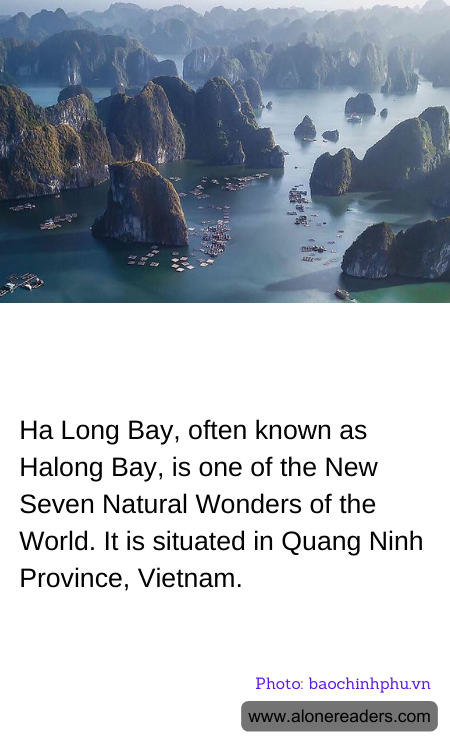
Nestled in the northeastern part of Vietnam, in Quang Ninh Province, Ha Long Bay is a mesmerizing natural wonder that spans an area of around 1,553 square kilometers. Often cited as one of the New Seven Natural Wonders of the World, this stunning locale is distinguished by its waters speckled with nearly 2,000 limestone karsts and isles in various shapes and sizes. This breathtaking seascape has not only attracted tourists from all around the globe but has also served as an inspiration for countless local legends and artistic expressions.
The name "Ha Long" translates to "where the dragon descends into the sea." According to local mythology, the islands and islets of Ha Long Bay were formed from jewels spat out by dragons sent by the gods to help the Vietnamese defend their land from invaders. As the dragons descended, they supposedly created a natural fortress against the intruders, leaving behind a labyrinth of waterways, towering limestone pillars, and lush islets.
The region's unique ecosystem also includes sprawling coral reefs, freshwater swamp forests, dense mangrove forests, and an impressive array of biodiversity that includes several endemic species. This makes Ha Long Bay not just a haven for geologists and naturalists, but also for passionate bird watchers and nature enthusiasts.
Visitors to Ha Long Bay can explore the area through a variety of means. Traditional junk boats offer leisurely cruises around the bay, offering panoramic views of the stunning landscape and visits to various islands and caves. Each of these sites holds its own allure, from the serene ambiance of Sung Sot Cave with its marvelous stalactites hanging from the high ceilings, to the remote and pristine beaches of Ti Top Island, perfect for a quiet swim or a hike to the top for panoramic views.
The local floating villages are another highlight, where communities have adapted to the maritime environment, living on floating houses and sustaining themselves through fishing and marine aquaculture. These villages, such as Vung Vieng and Cua Van, allow visitors to experience the local culture firsthand, providing insight into the daily lives of the bay's inhabitants.
Ecotourism and responsible travel practices are promoted to preserve the natural beauty and delicate balance of Ha Long Bay. The area was designated a UNESCO World Heritage site in 1994, which has helped to intensify efforts to protect this enchanting marine landscape from the pressures of increasing tourism and environmental challenges.
Ha Long Bay remains a compelling testament to Earth's natural history and beauty, an unforgettable landscape that continues to inspire awe with its mystical appearance and rich cultural heritage. Whether viewed from a kayak, from the air in a seaplane, or from one of the many hilltops on the islands, the panoramic vistas of Ha Long Bay offer an enchanting escape into a world where nature's artistic flair is on full display.
