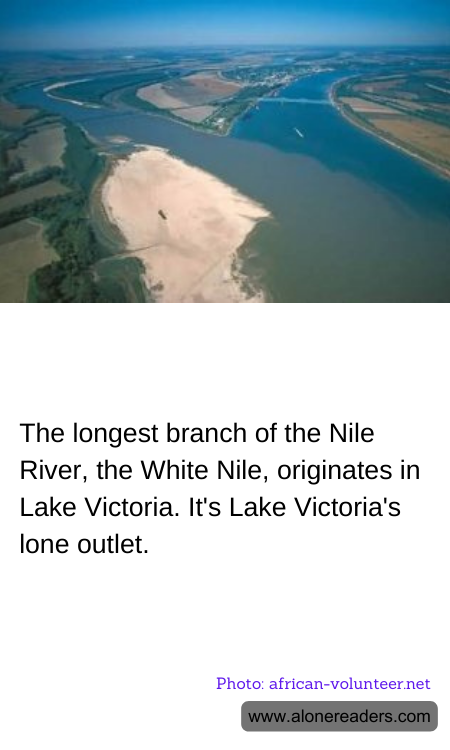
The White Nile, one of the two main tributaries of the Nile River, begins its journey at Lake Victoria, Africa's largest lake by area and the world's largest tropical lake. Despite being such a significant water body, Lake Victoria has only one outlet, the White Nile, which plays a crucial role in the ecology and hydrology of the region. The river's source can specifically be traced back to Jinja, Uganda, where it exits the lake and embarks on a long northward journey through East Africa and eventually merges with the Blue Nile at Khartoum, Sudan.
The White Nile is characterized by its meandering journey that stretches approximately 3,700 kilometers (2,300 miles) making it one of the longest river stretches in Africa. During its course, it flows through diverse landscapes, including swamps, grasslands, and deserts. One of the most notable areas it traverses is the Sudd, one of the world's largest wetlands, located in South Sudan. The Sudd acts as a natural filter for the water but also slows the river's pace dramatically, affecting the hydrology of the entire Nile basin.
The river significantly contributes to the Nile's overall flow, although it carries less sediment than its counterpart, the Blue Nile. This makes the White Nile particularly crucial during the dry season, as it provides a consistent water supply that supports agriculture and sustains the populations along its banks.
The White Nile also holds a vital cultural and historical place in the regions it flows through. For centuries, it has been a source of sustenance, a means of transport, and a center of commerce. Moreover, the river has played a crucial role in the histories and legends of the local communities, shaping the cultural landscape of East Africa.
In modern times, the White Nile remains essential for economic activities such as agriculture and fishing. However, it faces numerous challenges, including pollution, overfishing, and the impacts of climate change which threaten its flow and, by extension, the well-being of millions who depend on its waters. Initiatives for sustainable management and conservation are increasingly important to ensure that the White Nile continues to sustain the diverse needs of the people and wildlife that rely on it. Through cooperative regional efforts, there is hope that this vital waterway can be preserved for future generations, maintaining its ecological, economic, and cultural significance.
