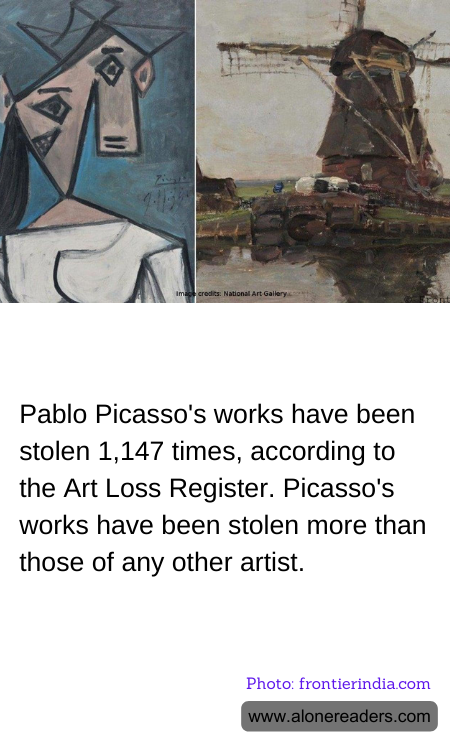
Pablo Picasso, one of the most influential artists of the 20th century, has the dubious distinction of being the most stolen artist in history. According to the Art Loss Register, his works have been stolen a staggering 1,147 times. This phenomenal number not only underscores the immense popularity and value of Picasso’s art but also highlights significant issues related to art security and theft prevention.
Picasso’s extensive oeuvre, which spans thousands of pieces including paintings, sculptures, and ceramics, is distributed all around the globe in museums, galleries, and private collections. The high demand and hefty price tags attached to his works make them particularly attractive to thieves. Notable thefts include the 2010 heist at the Paris Museum of Modern Art, where five of Picasso's paintings, among works by other artists, were stolen in a single break-in. The total value of the stolen artwork was estimated at around €100 million. More recently, in 2019, a Dutch art thief stole Picasso’s "Tête d'Arlequin" and several other valuable paintings from an exhibition in Athens, Greece.
These frequent thefts highlight challenges in securing and protecting art, especially works by renowned artists like Picasso. Despite advanced security technologies and international databases such as the Art Loss Register, the theft of high-value artworks remains a lucrative venture for criminals. It raises questions about how institutions and private collectors can better safeguard their collections. Furthermore, these incidents also underscore the ongoing need for international cooperation in tracking and recovering stolen art.
Art theft not only deprives the public and potential viewers of the chance to experience these works but also represents significant financial losses and cultural heritage damage. In response, there have been increasing calls for stronger preventive measures, better security protocols, and more stringent penalties for art theft. The continuing saga of Picasso’s stolen artworks serves as a stark reminder of the persistent threats facing artistic treasures and the complex responsibilities involved in preserving them for future generations.
