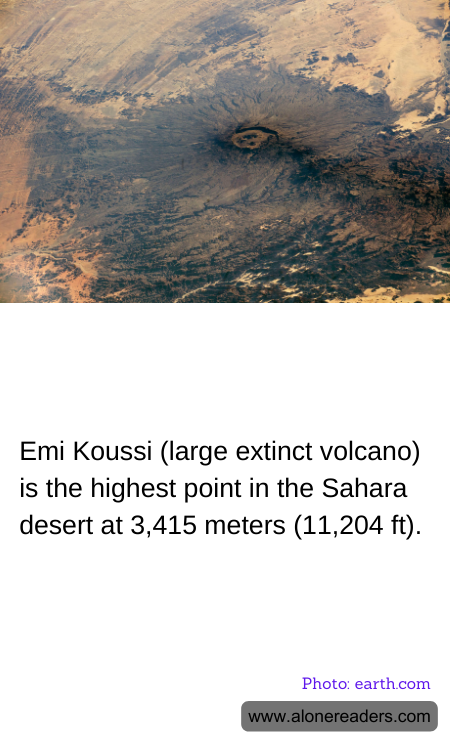
Emi Koussi, an extinct shield volcano situated in the Tibesti Mountains of northern Chad, stands as a monumental landmark not just in Chad but also in the vast expanse of the Sahara Desert. Towering at an elevation of 3,415 meters (11,204 feet), it is the highest point in the Sahara, making it a significant geographical and natural beacon in the region. The volcano's base spans an impressive area, indicating its massive scale and the extensive volcanic activity that once occurred.
The formation of Emi Koussi dates back to the Tertiary period, which adds a fascinating historical dimension to its geological significance. Its landscape features a relatively well-preserved caldera at the summit, spanning about 12 kilometers in diameter, with two smaller calderas nested inside. These calderas tell a story of powerful eruptive phases that have shaped the volcano’s current form.
Despite its extinct status, Emi Koussi remains a subject of interest amongst geologists and volcanologists who study its structure and past activity to gain insights into the volcanic history of the Sahara. The area surrounding the volcano is composed of various lava flows and pyroclastic deposits, providing rich material for scientific study and analysis. Furthermore, the sheer size and isolated location of Emi Koussi make it a natural observatory for environmental and climate studies in an otherwise remote part of the world.
For adventurers and trekkers, Emi Koussi offers a challenging yet rewarding experience. The harsh yet starkly beautiful Saharan environment presents unique challenges, including extreme temperatures and scarce water supplies. However, those who undertake the journey to its summit are rewarded with unparalleled views of the surrounding desert landscape and a profound sense of solitude that only such a remote place can offer.
The cultural significance of Emi Koussi is also notable, as it is embedded in the local Tubu tribes’ traditions and histories. The mountain not only forms an integral part of their natural environment but also features in their narratives and rituals, further enriching the human connection to this imposing natural wonder.
In conclusion, Emi Kouissi represents an intersection of natural beauty, cultural heritage, and scientific interest, standing as a towering testament to the dynamic and diverse nature of the Sahara Desert. Its prominence as the highest point in the Sahara only adds to its allure, drawing the interest of scientists, adventurers, and those keen to learn about or experience one of the most intriguing natural features on the African continent.
