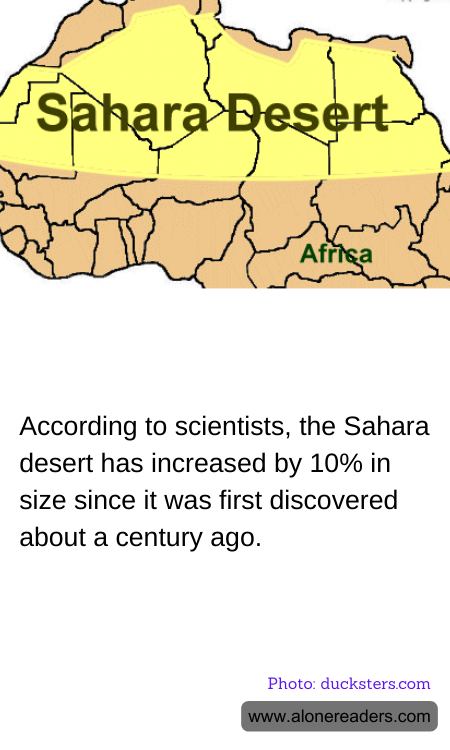
The Sahara Desert, a vast expanse stretching across nearly all of North Africa, has been a subject of study due to its dynamic nature and significant impact on global climate patterns. Recent research indicates that the Sahara has expanded by approximately 10% since the early 20th century, a finding that underscores the broader implications of climate change and variability across the region.
Scientists attribute this expansion primarily to climate change, fluctuations in sea surface temperatures, and human-induced changes in land use. The desertification process is complex, influenced by both natural variability and human activity. For example, alterations in the Atlantic Multidecadal Oscillation, which affects climate and rainfall patterns in the Northern Hemisphere, have been linked to periods of increased aridity in the Sahel, the transitional zone bordering the southern edge of the Sahara.
The consequences of the Sahara's expansion are profound, particularly for the millions of people living in the Sahel. As the desert encroaches upon arable land, it threatens food security and exacerbates resource scarcity, leading to socioeconomic instability. Moreover, the shift in landscape can alter local weather patterns, further complicating cultivation and livestock management in these marginal areas.
The increase in the Sahara’s size also contributes to global climatic effects. For instance, the larger area covered by sand and rock reflects more sunlight back into the atmosphere, which can influence atmospheric conditions far beyond the region. Furthermore, sand from the Sahara is carried by winds across vast distances, affecting air quality and precipitating marine ecosystems in regions as far away as the Caribbean.
Efforts to mitigate the impact of desertification include sustainable land management practices, such as reforestation and improved agricultural techniques which help maintain soil quality and reduce the likelihood of erosion. International cooperation and investment are critical to supporting these activities, especially in regions lacking the resources to combat these changes independently.
Understanding and addressing the implications of the Sahara's expansion is vital not only for the immediate regions affected but also for global environmental health and sustainability. Continued research and monitoring are essential in crafting effective strategies to combat desertification and adapt to its consequences for years to come.
