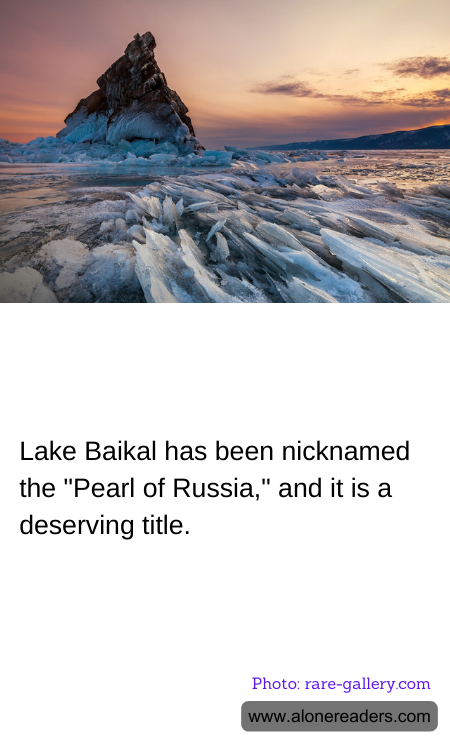
Lake Baikal, often referred to as the "Pearl of Russia," is one of the most magnificent and unique freshwater bodies on Earth. Situated in Siberia, it is not only the world's deepest and oldest lake but also one of the largest by volume. This stunning natural wonder is estimated to hold about one-fifth of the world’s unfrozen freshwater, making it a critical reservoir for the planet.
The lake's origins trace back some 25 million years, making it one of the most ancient lakes in geological history. Its depths reach a staggering 1,642 meters, which houses a complex and diverse ecosystem with thousands of plant and animal species, of which many, like the Baikal seal, are endemic to the region. This high level of endemism has been of great interest to scientists and naturalists around the world, contributing significantly to the lake’s reputation as a natural laboratory for evolutionary studies.
Apart from its ecological and biological significance, Lake Baikal is ingrained in the cultural fabric of the indigenous populations such as the Buryats. The lake is considered sacred, featuring prominently in local mythology and folk traditions. It's also a focal point for environmental and conservation efforts, given its unique biodiversity and status as a UNESCO World Heritage site since 1996.
However, the “Pearl of Russia” faces multiple environmental threats including pollution from industrial run-off, climate change which affects the ice cover and water temperature, and the potential risks from nearby industrial activities, including mining. Conservationists are continually working to address these challenges, aiming to preserve Lake Baikal’s pristine condition for future generations.
For travelers and adventurers, Lake Baikal offers breathtaking landscapes and a unique glimpse into Siberian wilderness. From the ice-capped peaks surrounding the lake in winter, creating a mesmerizing spectacle of clear blue ice, to the lush greenery and blooming wildflowers in summer, every season presents a new face of Baikal’s beauty. The lake is not only a haven for scientists but also for tourists seeking solitude or adventure in its serene vastness. Whether it’s hiking, camping, or simply enjoying the calming views, Lake Baikal holds a special allure.
Ultimately, Lake Baikal’s title as the “Pearl of Russia” symbolizes more than just its beauty; it underscores the ecological and cultural richness that Russia cherishes and strives to protect. It stands as a beacon of the natural world’s splendor and complexity – truly one of the planet’s extraordinary treasures.
