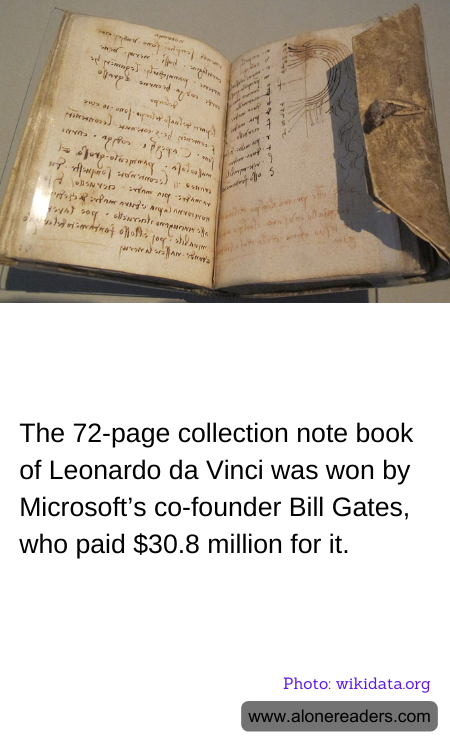
In 1994, a historic auction took place that saw Microsoft co-founder Bill Gates acquire one of the most fascinating manuscripts in the history of science and art. Leonardo da Vinci’s 72-page notebook, commonly referred to as the Codex Leicester, was purchased for an astounding $30.8 million. This acquisition not only speaks volumes about the value of historical documents but also highlights the enduring interest in Leonardo da Vinci's genius.
Leonardo da Vinci, an archetypal Renaissance man, was not only a master artist known for works like the Mona Lisa and The Last Supper but was also an ingenious scientist and inventor. His notebook, penned between 1506 and 1510, is an exceptional reflection of da Vinci's wide-ranging curiosity and intellect. The Codex Leicester consists predominantly of his observations and theories related to astronomy, the properties of water, rocks, and fossils; inventions, and more conceptual sketches. It is an essential document that showcases da Vinci’s attempts to understand the natural world through detailed illustrations and meticulous notes.
The price paid by Gates for the Codex Leicester underscores the manuscript's immense historical and academic value. It is one of the few surviving notebooks by da Vinci, and it offers incredible insight into the workings of the mind of a genius who was well ahead of his time. Since acquiring the Codex, Gates has taken steps to make it accessible to the public; the notebook has been exhibited in various cities worldwide, and digital versions of the pages have been made available for educational purposes.
Through his purchase and subsequent sharing of the Codex Leicester, Gates has helped preserve and disseminate knowledge that might otherwise have been accessible to only a select few. This move has allowed a broader audience to appreciate the breadth of da Vinci's intellect and his relentless pursuit of understanding and innovation. The acquisition not just preserved a pivotal piece of Renaissance thought but also acted as an example of how contemporary figures can impact the promotion and preservation of historical treasures.
