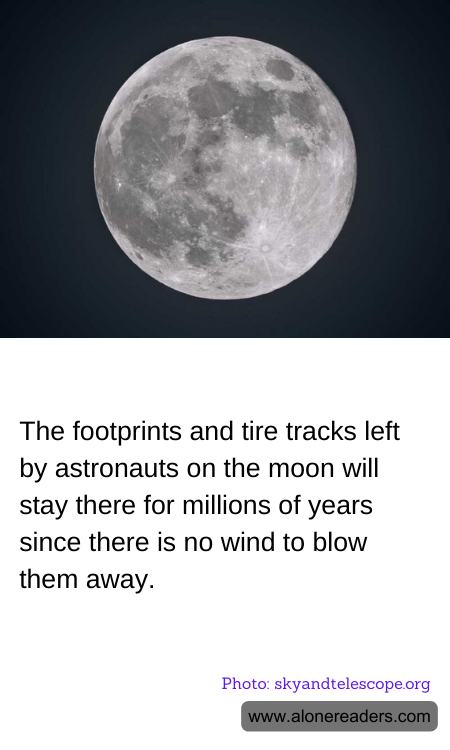
When the Apollo astronauts landed on the moon, they did more than just walk on its surface?—they left behind distinct imprints that have become iconic symbols of human exploration. The footprints and tire tracks etched into the moon’s dusty surface are not just temporary marks; they are likely to endure for millions of years. This extraordinary preservation is possible because the lunar environment differs vastly from Earth’s.
The moon has no atmosphere to speak of, which means there are no winds to erode or reshape the surface. On Earth, wind, water, and various geological activities continuously alter the landscape, smoothing out footprints and tire tracks over time. However, on the moon, these features remain almost as they were left, essentially frozen in time.
Moreover, the moon's lack of atmosphere also means no weathering processes like rain or snow, which on Earth would contribute further to erasing such marks. There is also minimal geological activity on the moon compared to Earth. Although the moon experiences what are known as "moonquakes," these are generally not strong enough to significantly alter the lunar surface at most locations.
The longevity of the imprints left by the astronauts serves as a poignant reminder of humanity's first steps into a wider universe. These marks are not merely footprints but historical artifacts representing human ingenuity and the spirit of exploration. They tell a story of a time when humans first ventured beyond Earth, marking an achievement that continues to inspire awe and curiosity.
Interestingly, this preservation also offers scientific value. By studying these footprints and tire tracks, scientists can learn more about the properties of the lunar soil, known as regolith, and how it interacts with various forces. Each mark provides insights into the moon's surface conditions at the time of the Apollo missions, serving as a baseline for understanding changes that might occur in the future.
In essence, the footprints on the moon are more than just remnants; they are a bridge connecting past human achievements with future explorations. As we plan further lunar missions, including potential human settlements, these ancient tracks remind us not only of where we have been but also of the mysteries that still lie ahead in our lunar explorations.
