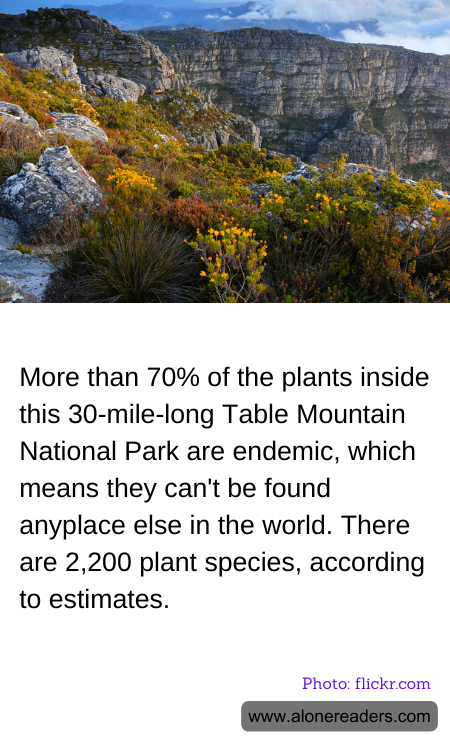
Table Mountain National Park, a breathtaking natural reserve in South Africa, spans an impressive 30 miles and is renowned not just for its majestic landscapes and rich biodiversity, but particularly for its remarkable flora. An astonishing 70% of the plants in this park are endemic, making it one of the most singular botanical treasures globally. These plants, totally unique to the region, thrive in an environment that has shaped their evolution into forms found nowhere else on Earth.
Of the 2,200 plant species catalogued so far within the park's boundaries, many are part of the Cape Floristic Region, which is recognized as one of the world's six floral kingdoms. This diversity is exceptional, especially when considering the global statistics of plant endemism. The fynbos heathland, which covers a large part of the park, is particularly notable for its diversity of protea species. These resilient and vividly colorful plants are adapted to the local climate and soil conditions, making them a key species in the ecosystem.
The presence of such a high percentage of endemic plants makes Table Mountain National Park a critical area for conservation. The unique flora is susceptible to threats like climate change, invasive species, and human activity, all of which can destabilize these delicate ecosystems. Conservation efforts are therefore vital not only for the preservation of these unique species but also for the broader ecological health of the region. Programs within the park focus on habitat restoration, monitoring of species, and the control of invasive plants that threaten the native flora.
The park is not just a haven for botanists and conservationists but is also a popular destination for tourists and nature enthusiasts. The rich tapestry of plants provides breathtaking scenery and a living laboratory where visitors can learn about biodiversity and the importance of conserving unique biomes. Initiatives to educate the public on the park's ecological value and ongoing research and conservation projects contribute to raising awareness about environmental protection.
In conclusion, Table Mountain National Park serves as both a sanctuary for its endemic plant species and a beacon of biodiversity, underscoring the intricate relationships within ecosystems and the importance of environmental stewardship. Its status as a hotspot of unique biodiversity highlights the urgent need for continued and enhanced conservation strategies to safeguard these natural treasures for future generations. Through sustained efforts, the delicate balance of this environment can be maintained, helping to ensure that its botanical wealth continues to flourish and inspire.
