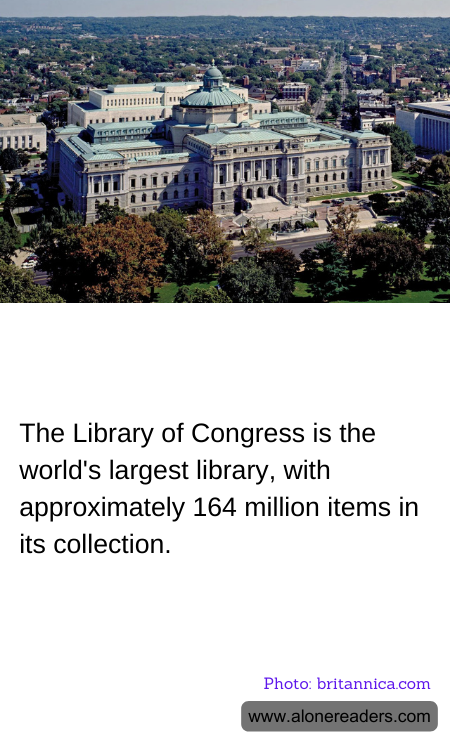
The Library of Congress, established in 1800, is renowned as the world's largest library. It boasts a truly awe-inspiring collection that encompasses approximately 164 million items spanning various forms of media. Located in Washington, D.C., the library serves as the research arm of the United States Congress and is considered the national library of the United States.
The vast holdings of the Library of Congress include more than just books. Its diverse collections encompass manuscripts, photographs, maps, music, films, and an extensive array of digital resources. One of its notable features is the sheer range of materials it houses, which are instrumental in supporting the Congress in its legislative duties as well as facilitating public access to a treasure trove of knowledge.
The library is divided into various buildings, with the Thomas Jefferson Building being perhaps the most famous due to its stunning Beaux-Arts architecture. This building alone attracts scores of visitors each year, who come not only to research but also to admire its opulent interiors and the series of murals and sculptures that celebrate the arts and sciences.
Scholars and researchers from around the world utilize the Library of Congress for its unrivaled collections. For instance, its manuscript division houses personal papers of many past U.S. presidents and historical figures, providing invaluable insights into America's history and culture. Furthermore, the library's ongoing commitment to digitization has expanded access exponentially, allowing people worldwide to discover and use its resources.
The Library of Congress not only functions as a repository of knowledge but also actively engages with the public through various programs and exhibitions. These often include free concerts, lectures, and special displays, which further its mission to support and enrich the cultural life of the nation.
The library's impact extends beyond national borders, with initiatives and partnerships that support global intellectual and cultural exchange. This makes it a pivotal institution not just for the United States but for the global community seeking to preserve and understand human heritage and knowledge. Through its commitment to growth and accessibility, the Library of Congress consistently demonstrates why it remains a vital institution in the digital age.
