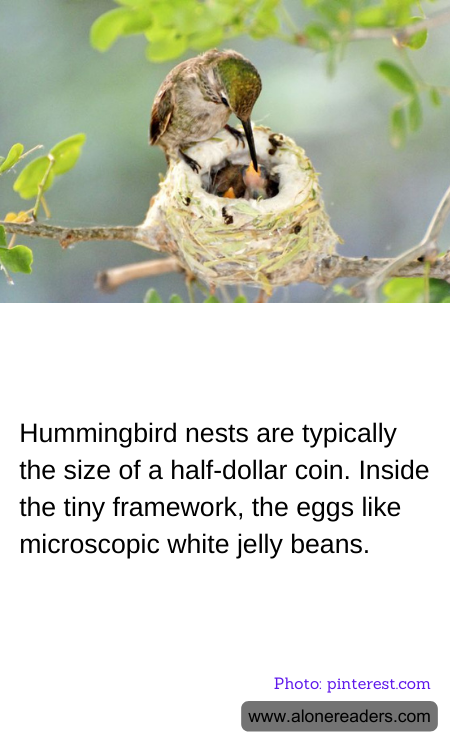
Hummingbirds, those enchanting, rapid-flitting denizens of the Americas, construct nests that are an extraordinary feat of avian architecture. Astonishingly tiny, these nests are often no larger than a half-dollar coin, blending seamlessly into their surroundings.
Crafted primarily from soft plant fibers, moss, and spider silk, hummingbird nests are both sturdy and flexible, capable of expanding as the growing chicks require more space. The use of spider silk is particularly ingenious; it allows the nest to stretch and accommodate the increasing size of the young hummingbirds, much like a small, elastic cradle.
Nest placement is strategic; female hummingbirds typically build their nests on tree branches, but they can also be found on loops of chain, wire, or other seemingly precarious perches. The location is always chosen for its security and protection from predators and harsh weather elements, often camouflaged by leaves and branches to deter unwanted visitors.
Inside these diminutive nests, the eggs are remarkably small, about the size of navy beans, presenting as glossy, minuscule white gems, usually numbered at two. The mother hummingbird is exceptionally devoted, as she embarks on the challenging task of incubating these eggs for around 15 to 18 days. During this period, the mother maintains a vigilant stand over her eggs, leaving only for brief moments to feed on nectar and catch insects.
Upon hatching, the chicks are incredibly vulnerable and almost entirely dependent on their mother. They are born blind, featherless, and completely immobile. The mother hummingbird continues her tireless efforts, feeding her brood every 20 minutes or so with a mix of nectar and pre-digested insects. This rich diet helps the chicks grow rapidly; within three weeks, they are typically ready to leave the nest.
The entire lifecycle of the hummingbird, from nest construction to the fledging of the chicks, underscores a delicate yet dynamic balance of nature, showcasing the resilience and adaptability of one of the smallest bird species in the world. Hummingbird nests, small though they may be, represent a marvel of natural engineering, crafted with precision and care that ensures the survival of the species from one generation to the next.
