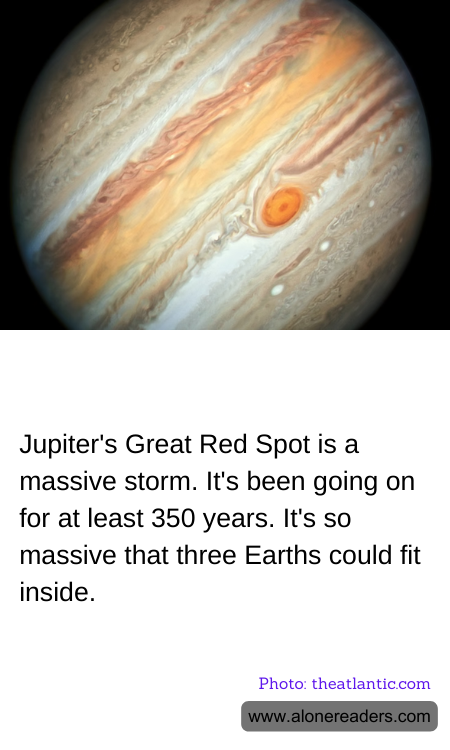
Jupiter's Great Red Spot, one of the most iconic features in our solar system, represents a colossal storm that has been raging continuously for at least 350 years. This gigantic atmospheric phenomenon is so large that it could comfortably encompass three Earths side by side. The Great Red Spot is easily identifiable because of its rich, reddish hue and oval shape, making it a striking feature on Jupiter's surface.
This remarkable storm is located in Jupiter's southern hemisphere and rotates counterclockwise with a period of about six Earth days. The exact reasons behind its enduring nature and distinct coloration remain subjects of scientific research, with theories suggesting that the red color could be due to complex organic molecules, red phosphorus, or yet another compound being drawn up from the deeper layers of Jupiter's atmosphere.
Observations and measurements reveal that the Great Red Spot is diminishing slowly over time, generating curiosity about its longevity and the dynamic processes that sustain it. Periodic fluctuations in size and color intensity are observed, yet the storm has persisted through centuries. This durability vastly exceeds the lifespan of any similar-sized storm observed on Earth, leading scientists to delve deeper into understanding the mechanics of Jupiter's atmosphere and their implications for atmospheric science in a broader context.
The Great Red Spot presents an excellent opportunity for scientists to study the dynamics of weather phenomena beyond Earth. With each pass of spacecraft like Juno, which has been orbiting Jupiter since 2016, new data enrich our understanding of this extraordinary storm and, by extension, the meteorological patterns that dominate this giant planet. Comparing these atmospheric behaviors to those on Earth can offer insights into planetary weather systems across the solar system and aid in predicting their long-term climatic behaviors. As such, the Great Red Spot isn't merely a marvel of the solar system; it's a window into the complex interactions within planetary atmospheres.
