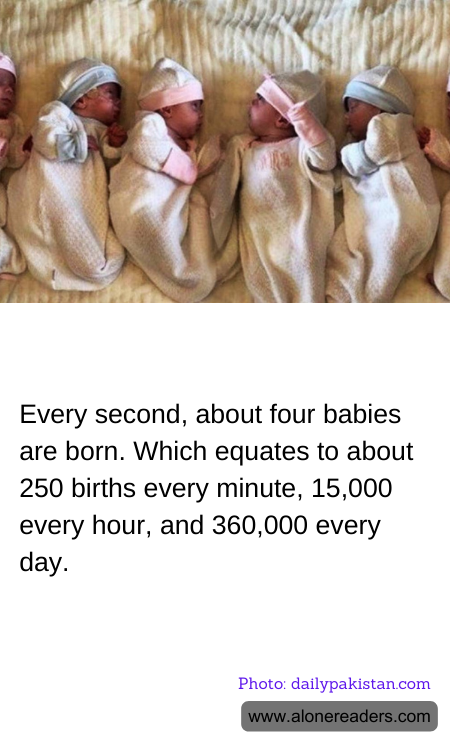
The birth rate around the world represents more than just numbers; it highlights the ever-growing complexity and dynamism of human populations. With around four babies born every second, totaling up to approximately 360,000 each day, these births paint a picture not only of population growth but also of changing demographic patterns, health standards, and economic conditions across the globe.
This constant influx of newborns affects various aspects of life on Earth, including healthcare, education, urban planning, and resource management. Healthcare systems, for instance, are perpetually under pressure to provide adequate care for mothers and infants, which includes prenatal and postnatal care. This is more pronounced in areas with high birth rates, which often strain under the challenge of providing sufficient medical care and maternal support.
Moreover, such a high birth rate has profound implications on global education systems. Each child represents future investments in education and training - a challenge for many countries struggling to provide universal access to quality education. The infrastructure needs to keep pace with increasing enrollments, requiring substantial investments in schools, textbooks, and teachers.
Urban planning and resource management also need to be agile enough to handle the growing population. Housing, water supply, sanitation, and transportation systems need expansion and constant upgrading to serve the increasing numbers. Additionally, more births imply a greater demand for food and a corresponding strain on agricultural systems and food distribution networks.
The high birth rate does signify hope and potential but also brings to light the significant challenges nations face in ensuring a sustainable future for the next generation. Countries with burgeoning populations, particularly in the developing world, often find it challenging to manage these dynamics effectively without international aid and robust internal policies aimed at sustainable development.
As global populations continue to swell, the challenges and impacts of such growth demand not only national attention but global cooperation. Strategies for sustainable development, effective resource management, and inclusive economic growth are crucial in ensuring that the new lives being brought into the world today can thrive in the days to come.
