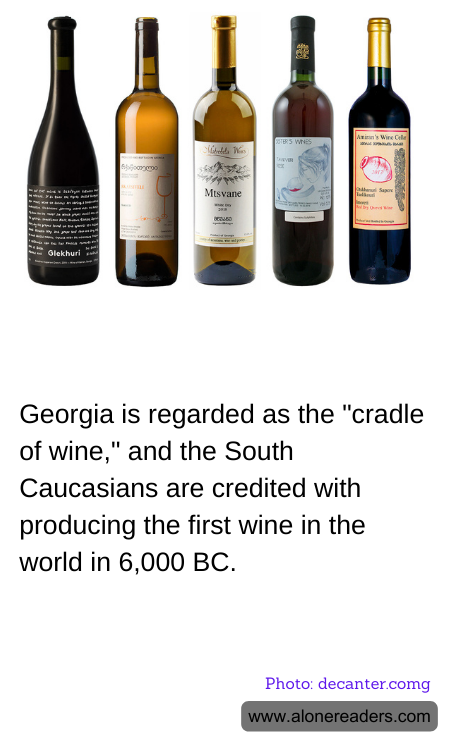
Wine-making is an art form that has been perfected over thousands of years, and there are few places more intertwined with the history of wine than Georgia. Often referred to as the "cradle of wine," this country holds a special place in the annals of viticulture. Archaeological evidence suggests that the South Caucasians, inhabiting present-day Georgia, were producing wine as early as 6,000 BC. This makes it one of the oldest wine-producing regions in the world.
The traditional Georgian method of wine-making involves fermenting grape juice in qvevri, large earthenware vessels, which are buried underground to maintain a constant temperature. This ancient technique allows the wine to ferment naturally, without the addition of yeasts, and contributes to a unique flavor profile characterized by a deep sense of place. This method has been recognized by UNESCO as an Intangible Cultural Heritage, highlighting its significance and the continuity of tradition in Georgian winemaking.
Georgia's climate is ideal for viticulture, with the fertile valleys of the South Caucasus providing perfect conditions for a variety of grape species. The diversity of grapes is vast, with over 500 unique varieties found in Georgia, many of which are not cultivated anywhere else in the world. This biodiversity is crucial for crafting distinct wines with complex flavors and aromas.
In recent years, Georgian wine has experienced a renaissance on the global stage. Wine enthusiasts and sommeliers around the world are increasingly drawn to the richness and authenticity of Georgian viticulture. The allure of experiencing some of the most ancient and untouched wine-making traditions in the world is compelling, making Georgian wine not just a beverage, but a narrative of its culture, history, and identity.
As the global wine community continues to grow and evolve, the traditions encapsulated in Georgian winemaking offer a connection to the past, as well as a guiding beacon for future practices. In celebrating the heritage of the "cradle of wine," Georgia not only shares its historical treasures but also fosters a deeper appreciation for the craftsmanship and heritage that define the culture of wine.
