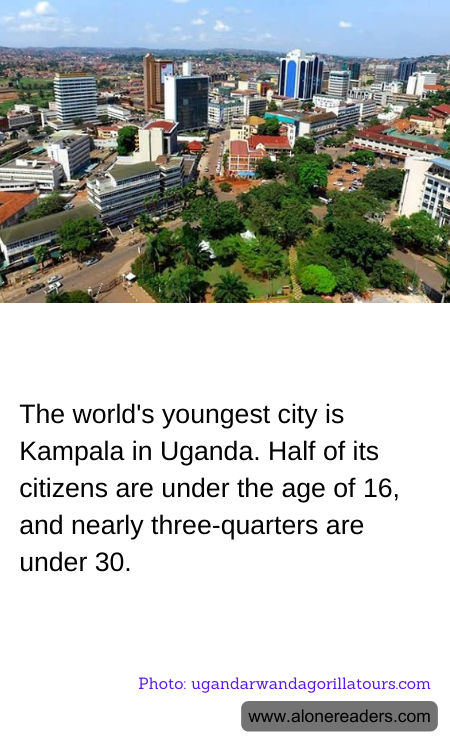
Kampala, the capital city of Uganda, holds the unique distinction of being the world’s youngest city. With a demographic profile where half of its inhabitants are under the age of 16 and nearly three-quarters are under 30, the city presents a vibrant, youthful character unlike any other globally. This demographic trend offers both challenges and opportunities that influence the social, economic, and cultural dynamics of Kampala.
The youthfulness of Kampala’s population drives a dynamic culture that is rich in innovation and creativity. The city is a hub for entrepreneurship, particularly in tech and creative industries. Young Ugandans are increasingly leveraging technology to develop solutions to everyday problems, contributing to a burgeoning startup ecosystem. Additionally, the arts and music scenes are predominantly youth-driven, pulsating with a mix of traditional African beats and contemporary genres, reflecting the hybrid nature of urban Ugandan identity.
However, the youthful population also poses significant challenges. Educational infrastructure is under immense pressure to cater to the growing number of children and adolescents. Schools often face issues related to overcrowding and insufficient resources, which impacts the quality of education. Furthermore, employment is a major concern, as the job market struggles to keep pace with the increasing number of young people reaching working age. This has led to high unemployment rates among youth, which can fuel economic inequality and social tensions.
On the healthcare front, the needs of such a youthful populace are distinct, with a strong emphasis required on reproductive health, mental health, and nutrition. Government and non-governmental organizations often focus on these areas to improve the overall health benchmarks of the population.
Addressing these challenges necessitates innovative governance and investment in key sectors. Urban planning and development must prioritize sustainable growth, ensuring that infrastructure—ranging from schools and hospitals to roads and digital connectivity—is robust enough to support the burgeoning population. Moreover, fostering a business environment that encourages local entrepreneurship and attracts foreign investment is crucial for job creation.
The government of Uganda, along with various stakeholders, is increasingly aware of these needs and is working towards inclusive policies that harness the demographic advantage of Kampala’s youthful populace. If managed wisely, the young workforce can be a driving force for sustained economic development and social change.
In conclusion, Kampala’s status as the world’s youngest city paints a picture of immense potential amidst significant challenges. It encapsulates a lively spirit with the ability to shape a better future for its young inhabitants. The city thus stands as a fascinating case study on how urban areas can adapt and thrive when the majority of its population are the youth.
