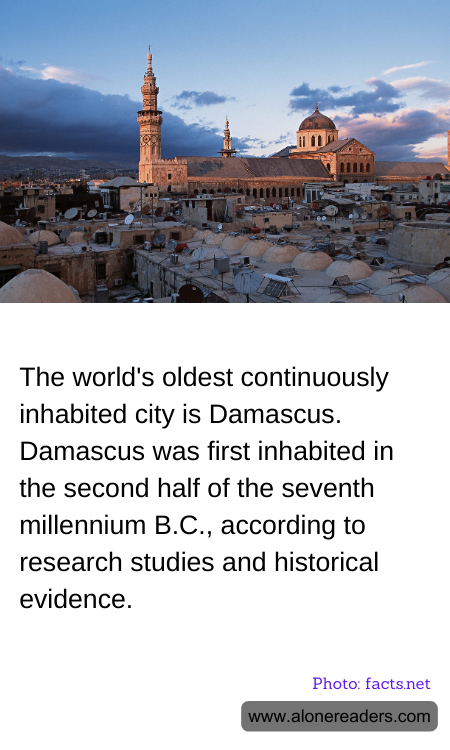
Damascus, widely recognized as the world’s oldest continuously inhabited city, boasts a history that stretches back to the second half of the seventh millennium B.C. This ancient city, now the capital of Syria, has been a cultural and political center for various civilizations throughout history, making it a treasure trove of human heritage. Its strategic location, nestled between the Mediterranean coast and the desert hinterland, allowed Damascus to thrive as a trading hub, facilitating the exchange of goods, ideas, and innovations between diverse civilizations.
The city's ancient roots can be traced back to different periods marked by innovation and growth. Damascus was originally a modest settlement which grew in significance due to its favorable geographical position. Over centuries, it has been governed by an array of empires—from the Arameans and Romans to the Umayyads and the Ottomans—each leaving their distinct imprint on the city’s architectural and cultural landscape. Notable for its historic architecture, Damascus is home to the Umayyad Mosque, also known as the Grand Mosque of Damascus, which is one of the largest and oldest mosques in the world, completed in 715 AD.
Throughout its long history, Damascus has shown remarkable resilience, surviving natural disasters, wars, and invasions, yet continuing to preserve its identity and heritage. Today, despite the modern conflicts affecting Syria, Damascus retains its unique character. The city’s old town, with its narrow alleys and traditional Damascene houses featuring distinctive courtyards and intricate wooden interiors, stands as a testament to its rich historical legacy.
Damascus not only offers a window into the past but also continues to be a central figure in the socio-political landscape of the Middle East. It encapsulates a blend of ancient traditions and modern influences, reflecting the complex layers of history that have defined the region. The enduring spirit of Damascus, coupled with its historical and cultural significance, underscores its importance as a site of human continuity and as a beacon of cultural endurance.
