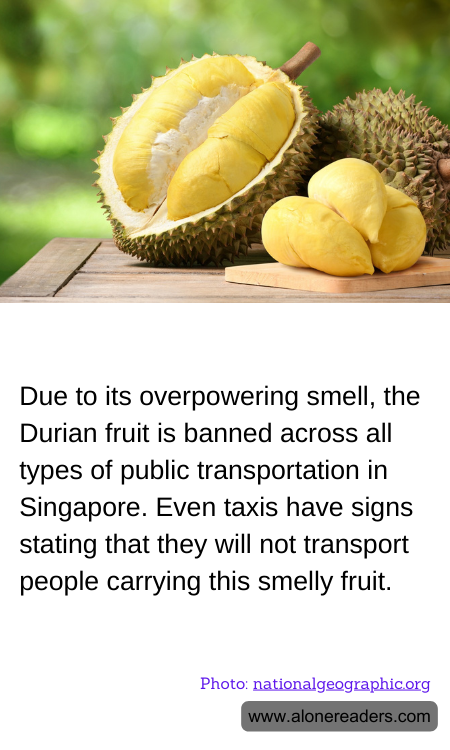
Often referred to as the "king of fruits" in Southeast Asia, durian is as famous for its pungent odor as it is for its rich, custardy flavor. The smell of durian is so strong and distinctive that it has led to the fruit being banned in many public spaces across Southeast Asia, including in Singapore, where it is prohibited on all forms of public transportation. This means no durian on buses, trains, and even taxis—a policy that underscores the deep cultural impact of this controversial fruit.
The divisive nature of durian comes from its smell, which has been variously compared to rotten onions, turpentine, and raw sewage. This intense aroma permeates through even the thickest shell, making it impossible to conceal. As a result, signs are commonly displayed in Singapore's public transport systems, as well as in some hotels and other public buildings, advising that the fruit is not welcome. These measures are not merely for passenger comfort; they are also a nod to maintaining a pleasant and neutral public environment.
The regulations surrounding durian demonstrate the unique challenges that cultural preferences can pose to public policy. While many Southeast Asians cherish durian for its taste and nutritional benefits—it's rich in iron, vitamin C, and potassium—the fruit's odor has made it problematic in densely populated urban environments like Singapore, where public transport is a primary means of mobility.
Despite these restrictions, the durian market continues to flourish in Singapore and throughout Southeast Asia. The fruit is a popular delicacy and is consumed in various forms, from fresh out of the shell to incorporated into recipes like cakes, ice creams, and even savory dishes. During the durian season, which typically peaks between June and August, durian stalls and pop-up markets become hubs of activity, drawing both enthusiasts and the durian-curious. Here, the stringent rules of public transport do not apply, and the air is thick with the aroma of durian, celebrated by many and endured by others.
This dichotomy is reflective of how social norms and cultural practices influence regulatory frameworks in different parts of the world. What might seem peculiar regulations to outsiders are often deeply rooted in the local context, addressing specific societal needs and preferences. Thus, while the ban on durian in public transport in Singapore might be seen as an amusing curiosity, it is a serious measure designed to ensure public comfort and uphold a certain standard of public convenience and cleanliness.
