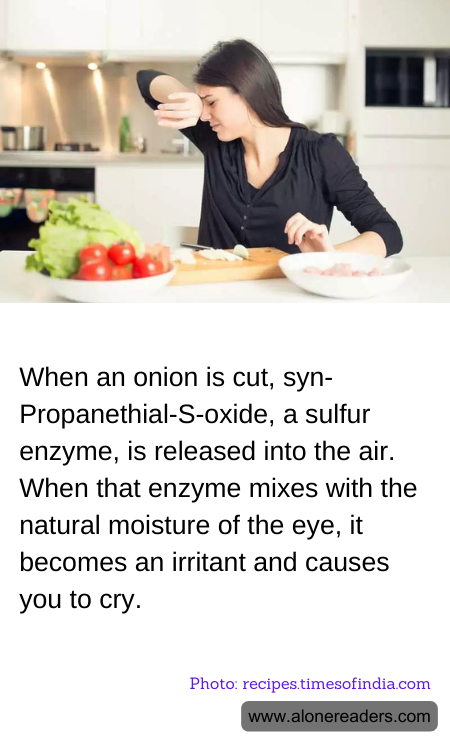
While chopping onions is a common part of cooking worldwide, it often comes with the inevitable tears. This occurs due to the chemical interactions that begin when you slice into the onion. The onion plant has evolved a defense mechanism to protect itself from pests and animals. When an onion's skin is broken, cells are crushed, and this triggers the release of certain enzymes. One key compound involved is called syn-Propanethial-S-oxide.
This compound is a volatile sulfur compound that diffuses through the air and reaches the eye, where it reacts with the moisture present there to form sulfuric acid. Although very dilute, this acid is potent enough to irritate the nerve endings in the eyes. In response, the eyes release tears to flush away the irritant and protect themselves from damage.
The intensity of the reaction can vary depending on the type of onion and how it is cut. For example, sharper knives cause less damage to the cell structures of the onion, thus releasing less of the irritating chemicals. Chilling the onion before cutting can also reduce the amount of enzyme released. Cooking the onion neutralizes the enzyme, which is why the irritation stops once the onion is being cooked.
Understanding this process can demystify the experience of tearing up while cutting onions and can help cooks manage this minor but ubiquitous kitchen challenge. Techniques such as using sharper knives, chilling onions, or employing kitchen gadgets like onion goggles are just a few methods to mitigate tears and make cooking a more comfortable experience.
