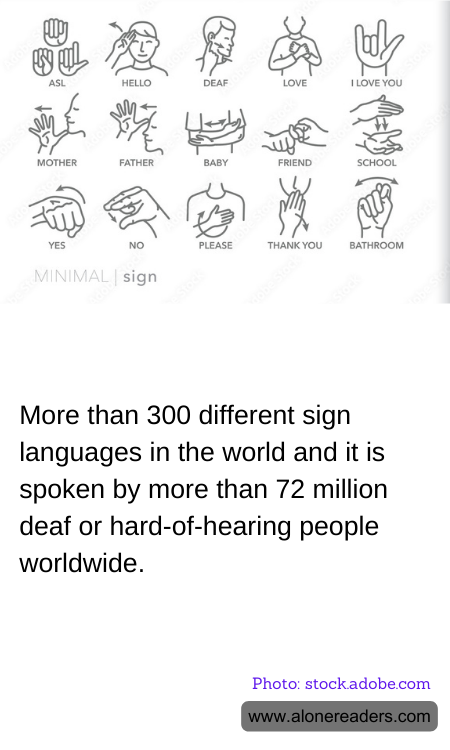
Sign languages are rich, diverse forms of communication used predominantly by the deaf and hard-of-hearing communities around the globe. With over 300 documented sign languages, these unique systems of gestures and signs provide critical avenues for conversation, expression, and cultural identity. Each sign language, like spoken languages, has its own rules for phonology, morphology, syntax, and pragmatics, contrary to the common misconception that they are merely mimed representations of spoken languages.
The variety in sign languages can be attributed to the distinct cultural and linguistic evolution in different regions. For instance, American Sign Language (ASL) is widely used in the United States and Canada, but it is different from British Sign Language (BSL), which is used in the United Kingdom. These differences are profound enough that ASL and BSL users cannot automatically understand each other's sign languages. Similarly, countries like Japan, Russia, and South Africa have their own native sign languages, which reflect the diverse linguistic landscapes of these regions.
The development of these languages often parallels the formation of deaf communities and schools, which serve as epicenters for sign language growth and standardization. Such institutions not only facilitate communication but also foster a sense of identity and belonging among their members. As a result, sign languages are deeply embedded in the social fabrics of their respective communities.
Despite their widespread use and importance, sign languages often face challenges related to recognition and rights. Many are not officially recognized as languages by governments, impacting the provision of services and resources for the deaf and hard-of-hearing communities, including in educational contexts. Advocacy for the recognition and support of sign languages is crucial. It involves promoting the understanding that these are genuine languages with their own grammar and syntax, not simply a derivative of the spoken form.
In recent years, technology has played a significant role in the accessibility and visibility of sign languages. Video communication technologies, for example, have greatly facilitated remote sign language communication. Additionally, various mobile apps and software have been developed to teach and translate sign languages, helping to bridge the gap between deaf and hearing communities.
Understanding and respecting the diversity and functionality of the over 300 sign languages in use worldwide is essential for fostering inclusive societies. It acknowledges the rich linguistic tapestry of our world and the importance of communication in all forms. As global awareness and support for the deaf and hard-of-hearing communities continue to grow, the future of sign languages looks promising, with greater opportunities for preservation, recognition, and development.
