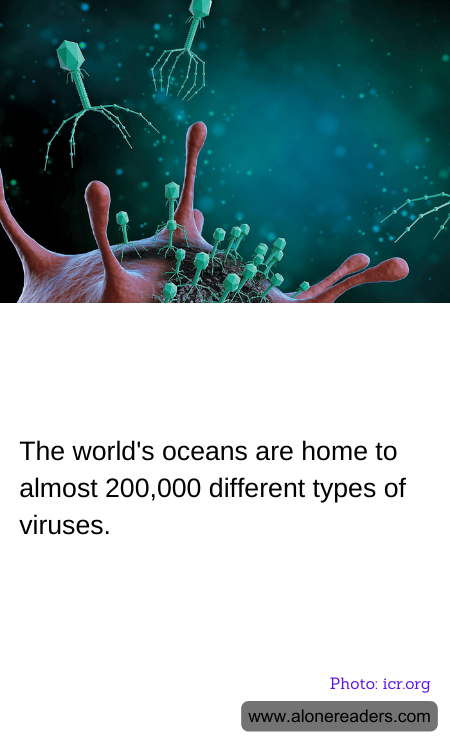
The vast and mysterious world of the ocean remains one of the least explored parts of our planet, despite covering more than 70% of the Earth's surface. It is home to a myriad of creatures and, perhaps most surprisingly, an immense collection of viruses. Recent studies have unveiled that the world’s oceans are teeming with nearly 200,000 different types of viruses, a figure that is continually being adjusted as new discoveries are made.
This staggering diversity in viral life found in marine environments plays crucial roles in the ocean's ecological balance and health. Viruses are predominantly known for their role in diseases but, in the oceans, they are essential components of the marine ecosystem. They can influence global biogeochemical cycles and control the microbial populations by infecting and lysing bacteria in the water. This process of lysing, where virus-infected bacteria burst and release their contents, is crucial in recycling nutrients in marine food webs. Essentially, viruses help regulate bacterial populations, which in turn influences nutrient availability for other organisms including fish, plants, and larger marine animals.
The diversity of oceanic viruses also contributes to genetic diversity among marine organisms. Viruses often carry genes from one organism to another—a process known as horizontal gene transfer—potentially speeding up the rate of evolutionary changes by spreading new genetic information. This can influence the adaptation and resilience of marine life to changes in their environment, including those brought about by climate change.
Moreover, the study of these marine viruses not only sheds light on ecological dynamics but also offers potential benefits for human society. For example, enzymes from viruses adapted to cold ocean temperatures could be used in industrial applications where low-temperature processes are needed. Research into how these viruses interact with marine organisms may also lead to discoveries in medicine, including new antibiotic properties or treatments.
The vast number of viruses in the world’s oceans underscores the complexity and interconnectedness of life on Earth. It serves as a reminder of how much remains unknown about the marine environment and the potential it holds for scientific discoveries that could benefit both the health of the planet and human society. As research continues, our understanding of these marine viruses is set to expand, potentially unlocking new scientific and medical breakthroughs. It highlights the importance of conserving marine environments, not just for the organisms we already know about, but also for the unseen microbial and viral life that plays a silent yet indispensable role in global ecological balance.
