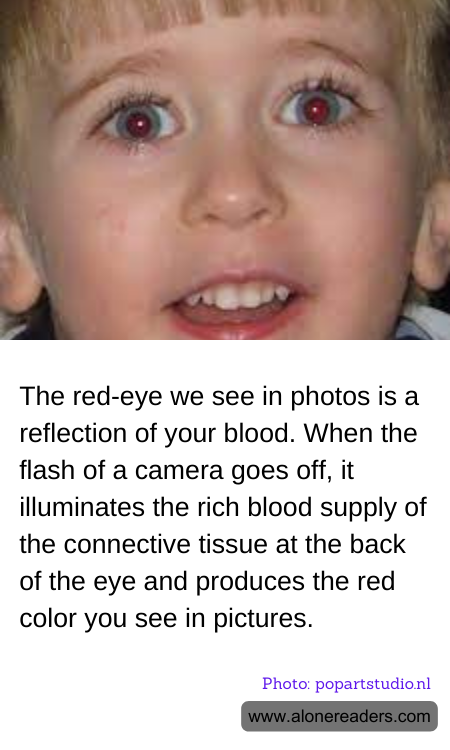
When taking pictures in low light, using a camera flash can often result in the appearance of red eyes in the photographs. This phenomenon occurs because the camera flash is not only powerful but also very quick, often too fast for the pupil of the eye to contract. The flash illuminates the inner part of the eye, known as the fundus, which includes the retina at the back of the eyeball.
The retina is rich in blood vessels, and when the flash hits it, it reflects this rich blood supply. Specifically, the red-eye effect is caused by the reflection of the light off the choroid, a layer of connective tissue containing blood vessels that lies between the retina and the sclera (the white of the eye). The choroid is nourished with blood, and thus when light from a flash strikes this area, it reflects back red, which is the color of the blood.
To avoid the red-eye effect, many cameras today come with a red-eye reduction feature. This feature works by emitting a pre-flash or series of flashes before the main flash. These preliminary flashes cause the pupils of the subject’s eyes to contract, reducing the size of the opening through which the flash can reach the choroid and bounce back. Additionally, positioning the flash so it doesn’t directly align with the subjects' eyes can help minimize or prevent red-eye. Some people also opt to use ambient lighting to brighten the room, reducing the need for a flash or reducing the pupil’s response to it.
In post-processing, red eyes can often be corrected using photo-editing software, which can digitally alter the eye color back to its natural look. Overall, understanding the cause of red-eye in photography can help in both preventing it and fixing it when it does occur, leading to more natural-looking photographic results.
