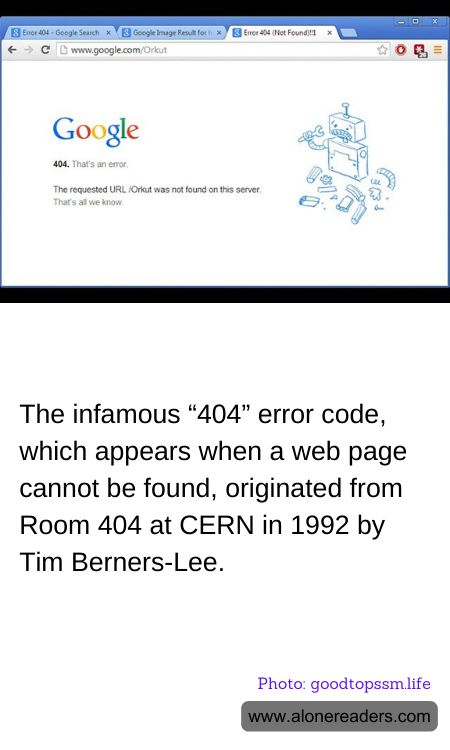
The "404 Not Found" error message is a staple of the internet, a common sight for anyone who has ever taken a wrong turn while browsing the web. This error code holds a curious origin story intertwined with the earliest days of the internet as we know it. The error code was invented in 1992 by Tim Berners-Lee, a British computer scientist at CERN, who is also famous for inventing the World Wide Web. The story behind the specific number "404" is quite interesting and linked to a physical location.
According to internet lore, the choice of the number 404 was not random. It supposedly originated from Room 404 at CERN, where the World Wide Web team was located. The room itself was significant because it housed the central database for the addressing of web pages. When someone tried to access information that didn't exist, the system would report that it was not found in Room 404, hence the error code 404 was born. This numeric designation thus became synonymous with missing web content.
Over time, the 404 error's notoriety grew, becoming an integral part of internet culture. It reflects both the end of a digital pathway and a challenge; while it signifies that the sought-after page does not exist, it also often prompts users to refine their search terms or navigate back to more fruitful online destinations. Various creative and whimsical custom 404 error pages have been developed by web designers across the globe as a way to soften the inconvenience of hitting a digital dead end.
Understanding this background enriches the interaction with the web, adding a touch of history to what might otherwise be a moment of frustration. The story of Room 404 at CERN serves as a reminder of the human and somewhat serendipitous origins of the digital tools we often take for granted today. This anecdote about the early days at CERN is a nod to the fascinating, often unplanned developments in technology that have shaped our contemporary digital landscape.
