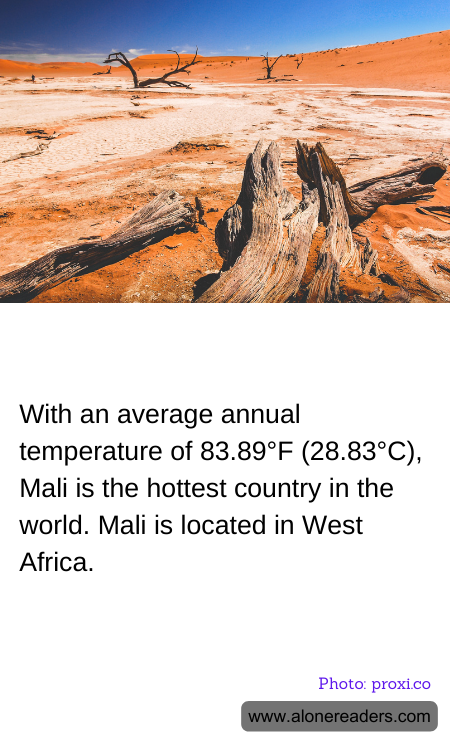
Mali, situated in West Africa, holds the distinction of being the hottest country in the world with an average annual temperature of 83.89°F (28.83°C). This intense heat is primarily due to its geographical position close to the equator and its expansive desert landscapes, particularly the Sahara Desert which covers a significant portion of the country. The high temperatures can have profound effects on the daily lives of the people living there as well as on the country's natural resources and agricultural practices.
In Mali, the relentless heat shapes everyday activities. The midday sun often dictates work schedules, with many choosing to perform labor-intensive tasks either early in the morning or later in the evening when the temperatures are somewhat tolerable. Traditional housing also reflects adaptations to the climate, with materials and designs chosen to maximize cooling. Mud bricks, common in Malian architecture, help insulate interiors from the oppressive outside heat.
Agriculturally, the intense heat and irregular rainfall patterns pose challenges for farming, a primary source of livelihood for many Malians. The reliance on rain-fed agriculture makes the country particularly vulnerable to changing weather patterns, potentially leading to food shortages when expected rains do not come. Moreover, the encroaching desertification exacerbates this issue, as fertile land diminishes under the expanding Sahara, pushing communities to adapt or relocate.
Environmental issues also pose a significant challenge. The soaring temperatures contribute to the severity and frequency of droughts, which in turn impact water supplies not only for agriculture but for daily human necessities. Efforts to combat these adverse effects include initiatives promoting sustainable land and water management practices, yet the scale of the problem requires substantial international support and cooperation.
Mali's extreme heat, therefore, is not simply a meteorological statistic but a central factor influencing the country's culture, economy, and environment. Understanding and addressing the impacts of such extreme weather conditions are crucial for enhancing the resilience of Malian communities and ensuring their ability to thrive in spite of the challenges posed by their climate.
