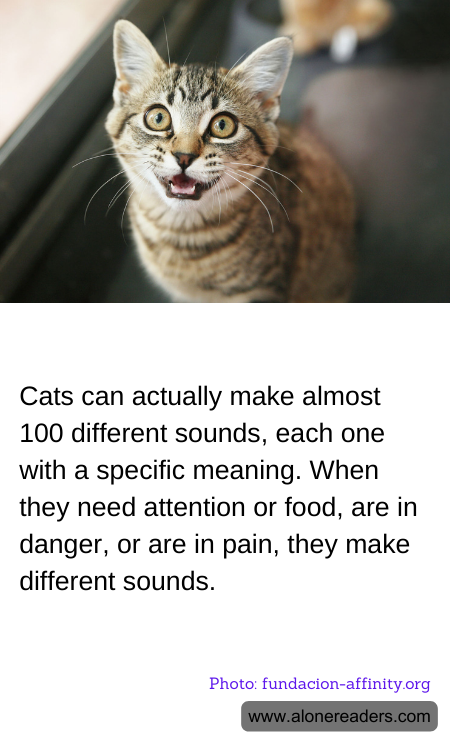
Cats are renowned for their ability to communicate using a variety of vocalizations. This communication skill is highly developed in domestic cats, who can emit nearly 100 different sounds. Each sound or meow has a distinct meaning, making cats one of the most vocal domestic animals.
The range of sounds produced by a cat includes purring, hissing, growling, and meowing, each serving different purposes. Purring is often associated with contentment and calmness, but it can also occur when a cat is in pain or anxious, serving a self-soothing function. Hissing and growling are typically defensive sounds, used to warn off threats or express discomfort or fear.
Meowing, however, is the most complex and context-dependent of cat sounds. Interestingly, adult cats rarely meow at each other but often use this form of communication with humans. Kittens meow to let their mother know they need attention, but as they grow, this behavior is adapted to communicate with humans. The type of meow can vary dramatically in pitch and intensity, depending on what the cat is trying to communicate. A short, high-pitched meow might be a standard greeting, while a longer, lower-pitched meow could indicate hunger or the desire to go outside.
Cats can also employ a mix of purring and meowing called the “purr-meow,” often used when they want to be especially persuasive, such as when seeking treats or more petting from their owners. This sound is typically very effective in drawing human attention.
Understanding the nuances of cat sounds can greatly enhance the bond between cats and their owners. By paying attention to the sounds a cat makes, an owner can learn to discern whether their pet is happy, scared, in pain, or just seeking attention. Recognizing and responding to these vocal cues can help in providing better care and developing a deeper, more communicative relationship with these fascinating creatures.
