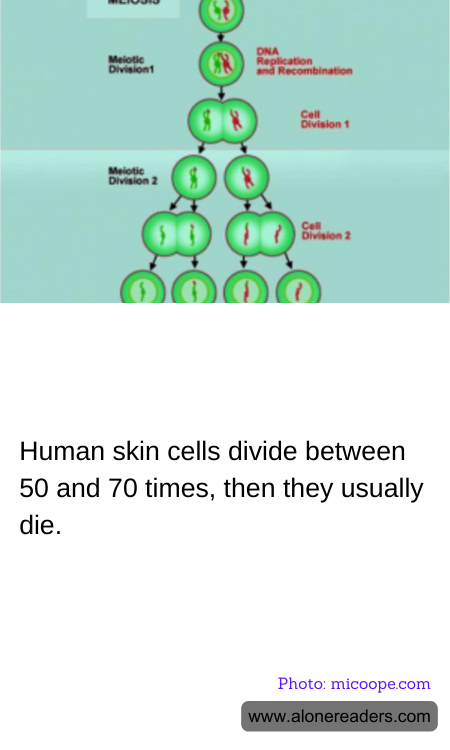
Human skin, the body’s largest organ, has a fascinating life cycle governed by cellular processes. Each cell in our skin typically divides between 50 and 70 times before undergoing a phenomenon known as cellular senescence. This limit, often referred to as the Hayflick limit after its discoverer Leonard Hayflick, represents a critical cellular mechanism for aging and cancer prevention.
The life cycle of skin cells starts in the deepest layers of the epidermis, where they are generated. These cells are initially full of potential, destined to divide and replenish the skin's surface layers. Throughout their life cycle, they help to protect the body against environmental factors such as UV radiation, pollution, and pathogens. As these cells divide, they gradually push upward toward the outer layers, slowly changing their structure and function.
Eventually, these cells lose their nuclei and transform into flat squames that form the outermost protective barrier of the skin. This crucial barrier is continuously shed and renewed. Over time, the cells’ ability to divide diminishes due to DNA damage accumulated due to environmental exposures and the natural aging process. This DNA damage triggers the cell's internal defense mechanisms, leading to cell death or senescence. Senescent cells can no longer divide and are eventually shed from the skin surface.
This process is essential not only for maintaining skin health and integrity but also for protecting against cancer. If cells were to divide indefinitely, DNA errors might accumulate to a harmful level, leading to the development of skin cancers. Cellular senescence acts as a brake on this potentially uncontrolled growth.
Moreover, the process of skin cell turnover and death is crucial for regenerative healing, allowing new cells to replace those that are damaged or old. Breakthroughs in understanding how skin cells age and die have also led to advancements in dermatological treatments and anti-aging products aimed at stimulating skin cell renewal, enhancing collagen production, and improving the overall health and appearance of the skin.
Thus, the natural life span of skin cells—bounded between 50 and 70 divisions—is not just a biological observation but a key to understanding human health, aging, and disease prevention.
